Rolling Meadows offers a practical Northwest Suburban location, a varied housing stock, strong park-district amenities, and convenient access to major roads. It does not have the traditional downtown or in-town Metra station found in some nearby suburbs, so the best fit depends heavily on the exact address, commute, school boundaries, and daily routine.
Key Takeaways
- Rolling Meadows is centrally located near Arlington Heights, Palatine, Schaumburg, Route 53, and I-90.
- Housing includes mid-century detached homes as well as townhomes, condos, and apartments, but the mix changes from one part of the city to another.
- The city does not have its own Metra station. Many commuters use a nearby station or drive, depending on where they live and work.
- The Rolling Meadows Park District reports more than 150 acres of parks and green space, several miles of walking paths along Salt Creek, nine baseball fields, and 12 playgrounds.
- School assignments must be verified by address because district and attendance boundaries do not follow simple city lines.
- Rolling Meadows feels more spread out and residential than suburbs built around a single downtown center. That is either a strength or a tradeoff, depending on the routine you want.
What is it like to live in Rolling Meadows, Illinois?
Living in Rolling Meadows is practical, connected, and largely residential. The city sits in the middle of several Northwest Suburban destinations, which makes it possible to reach jobs, shopping, dining, parks, and neighboring downtowns without building every part of life around one central district.
That layout is one of the clearest differences between Rolling Meadows and nearby communities such as Arlington Heights or Palatine. Rolling Meadows has local businesses, civic facilities, parks, and community events, but it is not organized around a traditional, walkable downtown and train station.
My honest view is that Rolling Meadows makes the most sense when the home and location work for your real routine. A house that puts you close to work, a nearby Metra station, a favorite park, or the people you see often may be a better fit than a more recognizable town name with a harder daily drive.
Where is Rolling Meadows located?
Rolling Meadows is in northwest Cook County, next to communities including Arlington Heights, Palatine, and Schaumburg. Route 53 runs along the area, with I-90 and major local roads providing connections across the Northwest Suburbs and toward Chicago and O'Hare-area employment centers.
The city covers about 5.62 square miles. The U.S. Census Bureau estimated 23,690 residents as of July 1, 2025. Those numbers make Rolling Meadows compact enough to feel established and local, while its position places a much wider set of suburban destinations within reach.
What kinds of homes are available in Rolling Meadows?
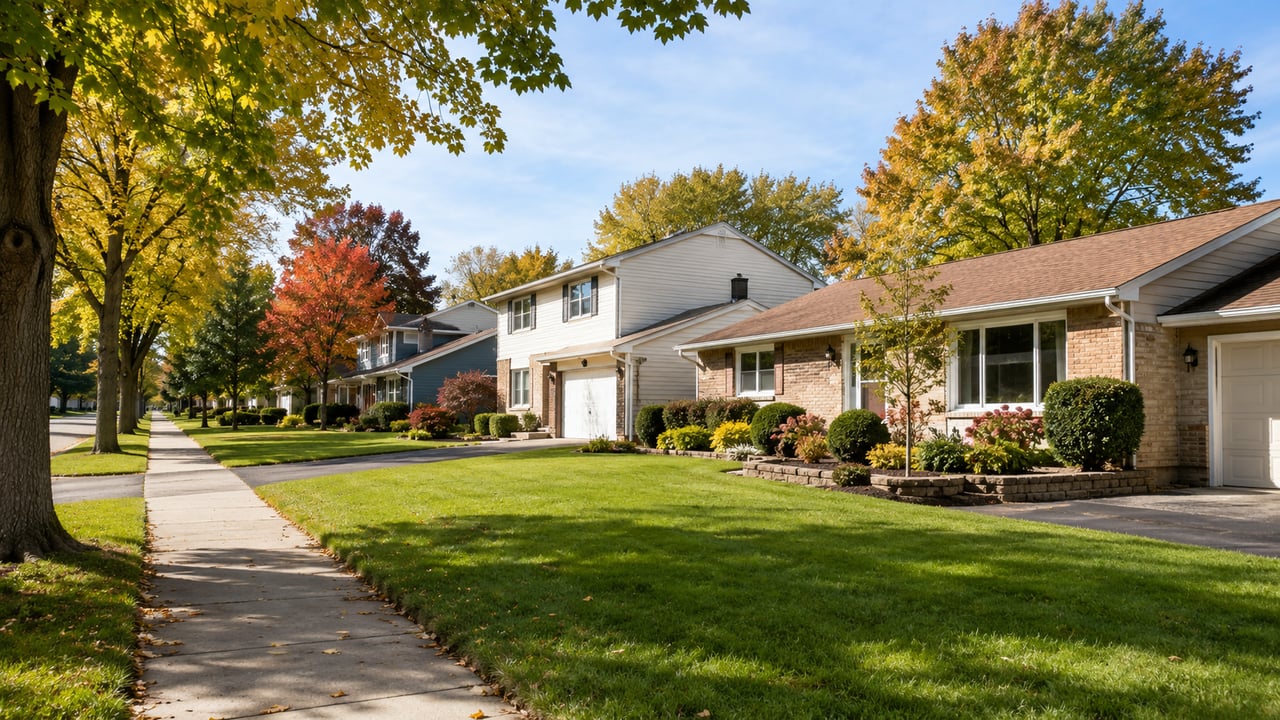
Buyers will find a mix of detached homes, townhomes, condos, and rental housing. Many detached neighborhoods include postwar and mid-century ranches, split-levels, and two-story homes. Lot sizes, home condition, association rules, and nearby road access can vary quite a bit, even within the same ZIP code.
A lot of people start by asking whether Rolling Meadows is less expensive than Arlington Heights, Palatine, or Schaumburg. Sometimes an individual home may offer a different price or space tradeoff, but there is no single answer that applies to every property type.
For context, Census QuickFacts reports a median owner-occupied home value of $326,200 for the 2020–2024 survey period and a median gross rent of $1,607. Those are broad historical survey figures, not current 2026 asking prices or a substitute for recent comparable sales.
The better comparison is home by home: purchase price, property taxes, insurance, HOA fees, expected repairs, commute costs, and how long the property is likely to work for you.
Does Rolling Meadows have a downtown?
Rolling Meadows does not have a traditional downtown centered on a Metra station. Shopping, restaurants, services, and community destinations are spread across corridors such as Kirchoff Road, Golf Road, Algonquin Road, and nearby commercial areas in surrounding suburbs.
For someone who wants to walk from home to a train, restaurants, and frequent downtown events, that may be a meaningful tradeoff. For someone who values road access, a quieter residential setting, and the ability to reach several nearby business and entertainment areas, the dispersed layout may work well.
How do people commute from Rolling Meadows?
Most Rolling Meadows residents should plan their commute around driving, a nearby Metra station, Pace service, or a combination of those options. Rolling Meadows does not have an in-town Metra station. Depending on the address, nearby stations in Arlington Heights, Arlington Park, Palatine, or another community may be practical choices.
Do not judge the commute from a town name alone. Test the trip from the actual home at the time you would normally leave. Include station parking, the drive or bus connection, the train schedule, and the final leg to work. A route that looks short on a map can feel very different during the weekday rush.
The Census Bureau reports a mean travel time to work of 25.5 minutes for Rolling Meadows workers in the 2020–2024 survey period. That is a communitywide average across many destinations and travel modes, not a prediction for a Chicago commute.
What parks and recreation are available in Rolling Meadows?
Rolling Meadows has a notably active park district for a city of its size. The Rolling Meadows Park District reports more than 150 acres of parks and green space, several miles of walking paths along Salt Creek, nine baseball fields, and 12 playgrounds.
Facilities and programs include pools, athletics, fitness, preschool, adult activities, skating, and hockey. West Meadows Ice Arena, Nelson Sports Complex, Community Center Park, Kimball Hill Park, and neighborhood parks create several different ways to use the park system rather than concentrating recreation in one place.
This is one of the community's strongest everyday-life features. Before choosing a home, look at which park or facility is actually nearby and whether the route is walkable, bikeable, or realistically a short drive for you.
What should buyers know about Rolling Meadows schools?
School assignments in Rolling Meadows depend on the property address. Buyers should never assume that a city name, subdivision name, or nearby school determines enrollment.
Much of the area is associated with local elementary and high-school districts serving Rolling Meadows and neighboring communities, but boundaries can cross municipal lines and may change. Use the district's address lookup and confirm the result directly before making a housing decision. My guide to elementary school districts near Arlington Heights and Rolling Meadows explains why this address-level check matters.
A Realtor can help identify the sources to check, but school quality and fit are personal decisions. Review current district information, programs, transportation rules, and any priorities that matter to your household directly with the relevant school district.
How much does it cost to live in Rolling Meadows?
The cost of living in Rolling Meadows depends on much more than the sale price. Property taxes, utilities, insurance, transportation, maintenance, and any HOA assessment all affect the monthly number.
Cook County property taxes deserve special attention. Compare actual tax bills for the homes you are considering, check whether exemptions are present, and ask how a future assessment or sale could affect the bill. If the property has an association, review the current budget, reserves, recent meeting minutes, insurance coverage, and any known or proposed special assessments.
This is where a calm, line-by-line comparison is more useful than asking whether an entire town is affordable. Two homes with similar list prices can create very different monthly and long-term costs.
What are the main tradeoffs of living in Rolling Meadows?
Rolling Meadows can be a strong fit when central location, road access, established housing, and park-district amenities matter more than having a downtown train-station lifestyle.
The main tradeoffs are just as clear:
- There is no Metra station within the city, so train commuters need another connection.
- Restaurants, shopping, and civic destinations are spread out rather than clustered in one downtown.
- School boundaries and property details require address-level research.
- Homes of similar age may have very different levels of updating and maintenance.
- Some locations offer quick highway access but may also be closer to busy roads or commercial uses.
None of those points automatically makes a home right or wrong. They are the questions to test before you fall in love with the kitchen or backyard.
Is Rolling Meadows a good place to move?
Rolling Meadows can be a good choice for someone who wants an established Northwest Suburban community with varied housing, a strong local park system, and access to several nearby employment and activity centers. It may be less appealing to someone whose top priority is walking to an in-town Metra station and a concentrated downtown.
The citywide overview gets you started. The real decision comes down to the block, the property, the monthly costs, and how the address supports the life you already have or are trying to build.
If you are actively planning a move, my complete guide to moving to or from Rolling Meadows walks through the practical next steps.
How should you compare Rolling Meadows homes?
Start with your non-negotiables, then compare addresses using the same checklist. That keeps the decision grounded when the homes themselves are very different.
- Test the real commute at the time you would travel.
- Verify school district and attendance boundaries directly by address.
- Review the current property-tax bill and exemptions.
- For attached housing, study HOA finances, insurance, rules, reserves, and special assessments.
- Look beyond cosmetic updates to the roof, windows, mechanical systems, drainage, and major maintenance.
- Visit the block at more than one time of day.
- Map the places you use weekly, including work, medical care, groceries, recreation, and the people important to you.
My recommendation is simple: compare the whole routine, not just the house. Rolling Meadows is at its best when its central location and practical housing options solve real problems in your day-to-day life.
Sources
- U.S. Census Bureau QuickFacts: Rolling Meadows city, Illinois for population estimates and 2020–2024 housing, rent, and commute figures.
- Rolling Meadows Park District for park acreage, paths, fields, playgrounds, facilities, and programs.
- City of Rolling Meadows for municipal services, planning, events, permits, and current city information.
About Mari Van Meter
Mari Van Meter is a REALTOR® with the Dragonfly Home Team at Berkshire Hathaway HomeServices American Heritage Real Estate. She holds the C2EX, SRES®, PSA, and ABR® designations and serves buyers and homeowners throughout Chicago's Northwest Suburbs. Mari helps people move through divorce, downsizing, relocation, and other major life changes with clear information, thoughtful organization, and care for the human side of the decision. Learn more at MyRealtorMari.com.
Follow-Up Questions
Does Rolling Meadows have a Metra station?
No. Rolling Meadows does not have an in-town Metra station. Depending on the property address and destination, residents may use a nearby station in Arlington Heights, Arlington Park, Palatine, or another suburb. Test the full trip, including parking or the connecting ride, before deciding.
Does Rolling Meadows have a downtown?
Rolling Meadows does not have a traditional downtown organized around a train station. Restaurants, shopping, city services, and recreation are spread across several corridors and nearby communities. This works well for some routines, but it is an important tradeoff for buyers seeking a walk-to-train lifestyle.
What types of homes are in Rolling Meadows?
Rolling Meadows includes detached homes, townhomes, condos, apartments, and rental communities. Detached neighborhoods commonly include ranches, split-levels, and two-story homes from different building periods. Condition, taxes, associations, and nearby land uses should be compared property by property.
Which school district serves Rolling Meadows?
School assignment depends on the exact address, and municipal boundaries do not neatly match school boundaries. Verify the district and attendance area through the relevant district's current address tool, then confirm programs and transportation details directly before relying on the assignment.
What parks are in Rolling Meadows?
The Rolling Meadows Park District reports more than 150 acres of parks and green space, several miles of Salt Creek walking paths, nine baseball fields, and 12 playgrounds. Its facilities and programs also include aquatics, fitness, preschool, athletics, skating, and hockey.
Is Rolling Meadows close to Chicago?
Rolling Meadows is in northwest Cook County with access to Route 53, I-90, nearby Metra stations, and Pace service. The practical travel time depends on the home's location, destination, time of day, and travel mode, so test the actual route instead of relying on a townwide estimate.