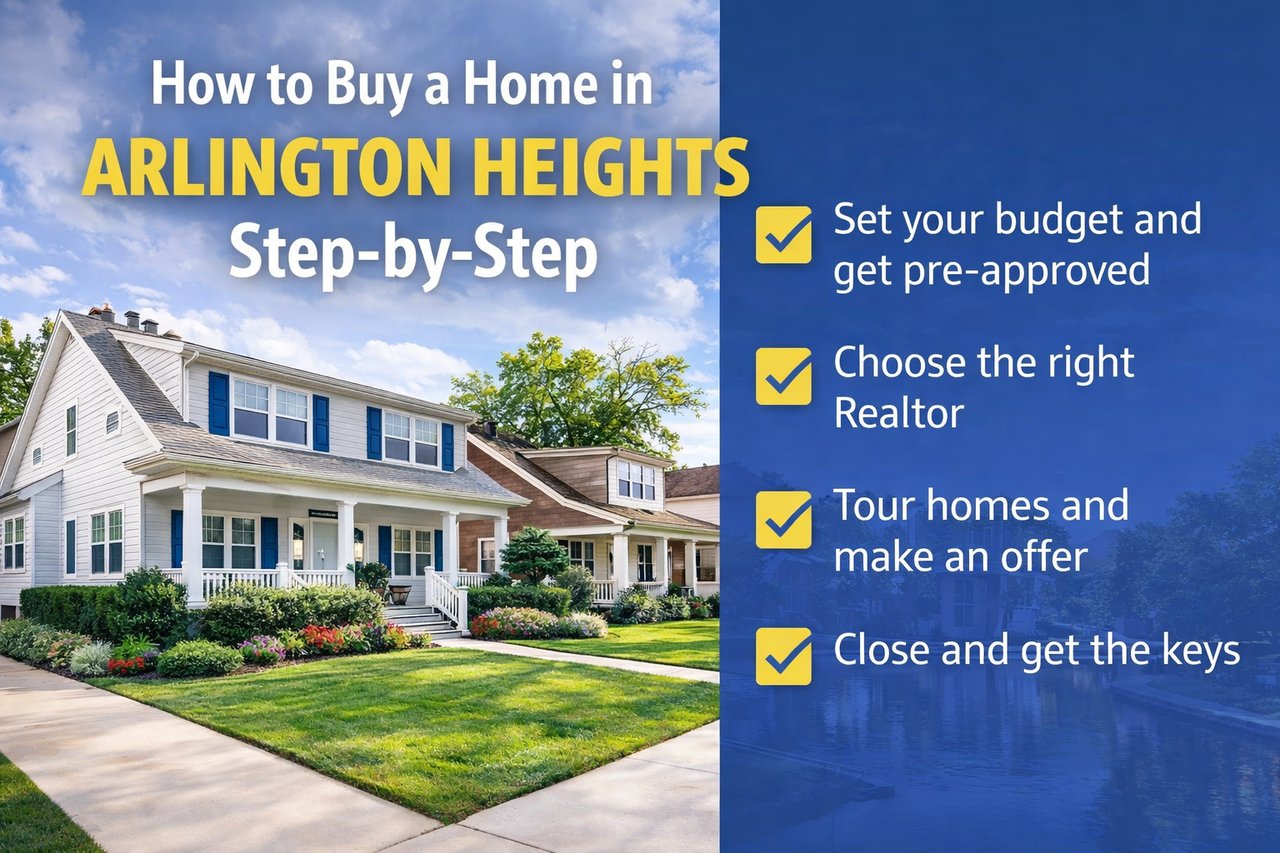
Buying a home in Arlington Heights involves more than finding a property you like. You also need to understand Cook County property taxes, school attendance boundaries, local neighborhoods, inspections, attorney review, and the costs that come with closing.
The process can feel like a lot at first. Breaking it into clear steps makes it much easier to manage.
Key Takeaways
- Build your budget around the complete monthly payment, including property taxes, insurance, association fees, and maintenance.
- Get fully pre-approved before touring homes seriously.
- Illinois real estate licensees use written buyer brokerage agreements when representing buyers.
- Neighborhood fit matters because different parts of Arlington Heights offer very different daily experiences.
- Verify school assignments directly with the appropriate district before making an offer.
- Consider a general inspection, radon test, and sewer scope when appropriate.
- Cook County property tax exemptions can reduce qualifying homeowners’ tax bills, but eligibility and application requirements should be reviewed after closing.
Why Buying in Arlington Heights Has a Few Extra Layers
Buying a home anywhere involves many moving parts. Arlington Heights adds a few local details that are worth understanding before you begin.
Cook County property taxes can make up a significant part of the monthly payment. School attendance boundaries do not follow simple neighborhood or ZIP code lines. The village also offers several distinct living experiences within a relatively small area.
You can find walkable streets near downtown, quiet residential neighborhoods, homes near Lake Arlington, mid-century subdivisions, condos, townhomes, and newer construction.
Getting clear on these details before making an offer can help you feel more confident throughout the process.
Step 1: Understand Your Complete Budget
Before opening a listing app, decide what monthly payment feels comfortable in your real life.
The amount a lender approves and the amount you want to spend are not always the same.
Your complete monthly housing budget may include:
- Mortgage principal and interest
- Cook County property taxes
- Homeowners insurance
- Private mortgage insurance, if applicable
- Condo or homeowners association fees
- Utilities
- Routine maintenance and future repairs
Property taxes vary from one Arlington Heights home to another. Two nearby properties with similar market values may have different bills because of assessed values, exemptions, tax districts, or prior appeals.
Review the actual tax bill for each property rather than relying only on the estimate shown on a real estate website.
You can look up tax bills and payment history through the Cook County Treasurer and review assessed values and exemptions through the Cook County Assessor.
My guide to Cook County property taxes for homebuyers explains what to review before deciding whether a home fits your budget.
Step 2: Get Pre-Approved With a Lender
A strong pre-approval is the foundation of your home search.
It helps you understand your price range, expected monthly payment, down payment options, and estimated closing costs. It also shows a seller that a lender has reviewed your financial information and that you are prepared to move forward.
A pre-approval is different from a quick online pre-qualification. A stronger approval usually involves reviewing your income, assets, debts, and credit.
A lender familiar with Cook County can also help estimate property taxes and explain loan programs that may apply to your situation.
You do not need to wait until you find a home you love. Getting the numbers early gives you time to ask questions and make adjustments without pressure.
Step 3: Choose Your Realtor Before Touring Seriously
It helps to choose your Realtor before you become emotionally attached to a particular listing.
Illinois real estate licensees use written brokerage agreements when representing buyers. Your agreement should explain the services the brokerage will provide, the length and scope of the relationship, and how compensation will be handled.
This is your opportunity to ask questions and understand exactly what representation includes before touring homes together.
Local knowledge matters in Arlington Heights because the differences between homes are not limited to bedrooms and square footage.
A local Realtor can help you evaluate:
- Neighborhood and street location
- Property taxes and exemptions
- School attendance boundaries
- Metra access and commuter parking
- Flight, road, and train noise
- Recent comparable sales
- Current competition
- Village permits and local requirements
Step 4: Define What You Really Need
Before you start touring, divide your preferences into three categories.
Must-Haves
These are the features you truly cannot compromise on. They might include:
- A certain number of bedrooms
- A home office
- A first-floor bedroom or full bathroom
- A specific school attendance boundary
- Access to the Metra station
- A garage or fenced yard
Nice-to-Haves
These are features you would enjoy but could add or change later, such as:
- An updated kitchen
- A finished basement
- A fireplace
- A larger mudroom
- Newer finishes
No-Thank-You Items
These are the features or situations you already know will not work for you. They may include:
- A home on a busy road
- More renovation than you want to manage
- No garage
- A very small yard
- A long drive to the train
This simple exercise helps you stay grounded when a beautiful kitchen or staged living room starts pulling your attention away from the bigger picture.
Step 5: Learn the Different Parts of Arlington Heights
Arlington Heights is not one single lifestyle.
Some people want to walk to downtown restaurants, events, and the Metra station. Others prefer quieter streets, larger lots, nearby parks, or easier highway access.
Different areas may offer:
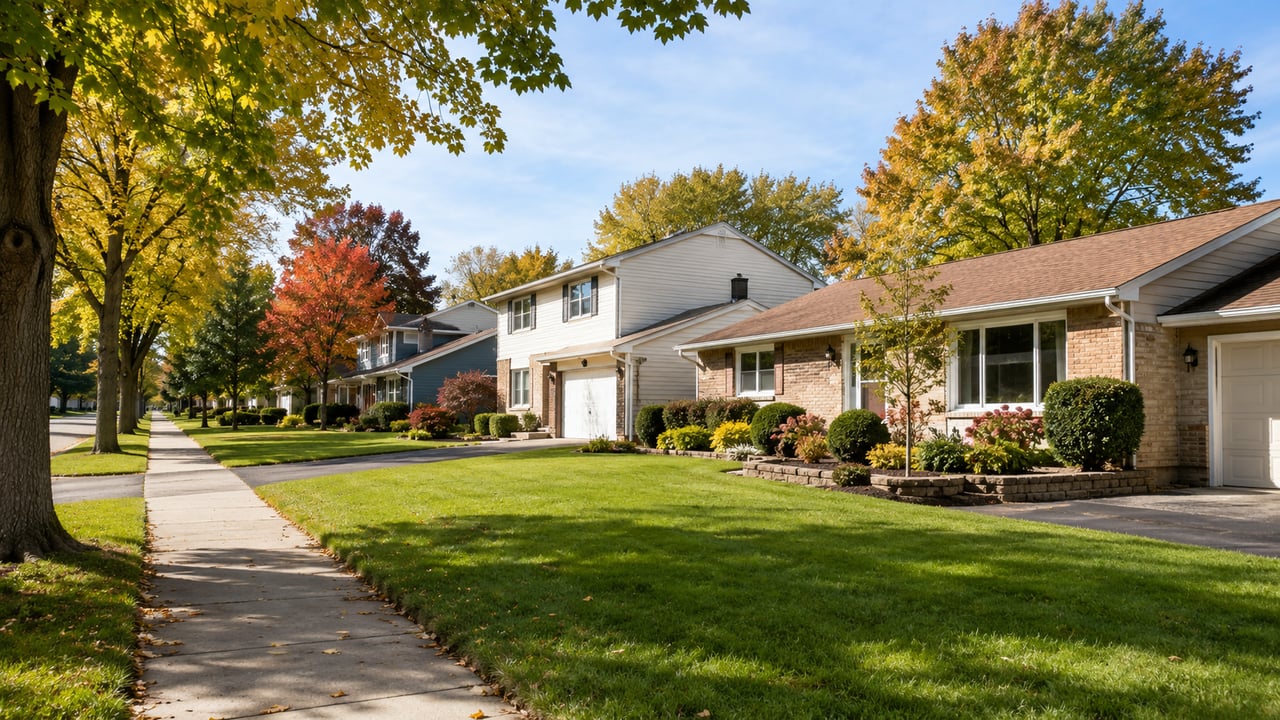
- Historic homes and newer construction near downtown
- Condos and townhomes near the Metra station
- Mid-century ranches and split-levels
- Homes near Lake Arlington and park district facilities
- Larger two-story homes in neighborhoods farther from downtown
School assignments can also change from one address to another, even when two homes appear to be in the same general neighborhood.
Read my guide to verifying school boundaries before buying and my comparison of District 211 and District 214 before narrowing your search based on schools.
Step 6: Tour Homes With Intention
Touring homes is exciting, but it is also where emotions can begin to take over.
Fresh paint and staging can distract from an awkward location. A beautiful backyard can make deferred maintenance easier to overlook. An updated kitchen may not make up for a floor plan that does not work for your daily routine.
As you tour, pay attention to:
- The layout and flow of the home
- Natural light
- Closet, basement, and garage storage
- The age and condition of the roof, windows, HVAC system, and water heater
- Street traffic and nearby noise
- Signs of moisture or water damage
- How the home feels in person compared with the photos
Compare each property with your real priorities, not an imaginary perfect home.
Step 7: Look Beyond the House
A thoughtful purchase includes more than evaluating the rooms and finishes.
Before making an offer, review:
- The property’s actual tax bill
- Current exemptions shown on the tax record
- The property’s assessed value
- Confirmed school assignments
- Nearby roads, train tracks, airports, and commercial areas
- The practical route to work, school, shopping, or the Metra station
- Association rules and finances for condos or townhomes
The Arlington Heights Metra station is located at 45 W. Northwest Highway and provides Union Pacific Northwest Line service to Chicago’s Ogilvie Transportation Center.
Travel times vary by train and schedule. Homes within walking distance of the station may carry a premium because of that convenience.
Step 8: Make a Thoughtful Offer
When you find the right home, your Realtor will help you structure an offer based on the property, comparable sales, current competition, and your comfort level.
The highest price is not always the only factor a seller considers. The overall terms and likelihood of a smooth closing can matter too.
Your offer may include:
- Purchase price
- Earnest money
- Proposed closing date
- Financing contingency
- Inspection provisions
- Attorney review provisions
- Items included or excluded from the sale
- Any requested credits or other terms
Preparation makes this step easier. When you already understand your budget, priorities, and comfortable limit, you can make decisions without feeling rushed into something that does not fit.
My guide to closing costs for Illinois homebuyers can help you understand the expenses beyond the down payment.
Step 9: Complete Inspections and Due Diligence
After your offer is accepted, the inspection and attorney review period begins.
Depending on the home, your due diligence may include:
- A general home inspection
- Radon testing
- A sewer scope, especially for an older home
- A pest inspection when appropriate
- Specialist evaluations based on the inspector’s findings
Radon is an invisible, odorless radioactive gas that can enter homes through the soil. Testing is the only way to know the radon level in a property.
If elevated levels are found, a qualified radon professional can explain possible mitigation options and provide an estimate based on the home’s design.
The purpose of the inspection is not to find a perfect house. It is to understand the home’s condition so you can make informed decisions about repairs, credits, future maintenance, or whether to proceed.
Your attorney will also review the contract and other legal documents. Depending on the property, the attorney and your real estate team may help identify concerns involving title, permits, association documents, or unresolved municipal issues.
Step 10: Finalize Your Financing
After inspection and attorney review, your lender continues the approval process.
This stage commonly includes:
- Submitting updated financial documents
- Completing the appraisal
- Reviewing title work
- Securing homeowners insurance
- Confirming final funds needed for closing
- Reviewing the Closing Disclosure
Federal rules generally require lenders to provide the Closing Disclosure at least three business days before closing for covered mortgage transactions.
Review it carefully and ask questions about anything that differs from the earlier Loan Estimate.
Cook County property taxes are paid in arrears, so the closing statement will usually include a tax proration. Your attorney can explain how that credit was calculated and what it means for your future tax bills.
Step 11: Complete the Final Walkthrough
The final walkthrough usually happens shortly before closing.
This is your opportunity to confirm that:
- The home is in the expected condition
- Negotiated repairs were completed
- Items included in the contract remain in the home
- The seller has removed personal belongings as agreed
- No unexpected damage occurred after the inspection
The walkthrough is not a second full inspection. It is a final check before ownership transfers.
Step 12: Close and Settle Into Your Home
At closing, you will sign the final documents, transfer the required funds, and receive possession according to the contract.
After closing, keep track of a few important items:
- Confirm how property taxes and homeowners insurance will be handled through your escrow account, if applicable.
- Review your potential eligibility for the Cook County Homeowner Exemption and any other exemptions.
- Update utilities and mailing information.
- Keep your recorded deed, title policy, survey, inspection report, and closing documents in a safe place.
- Review Village of Arlington Heights information for local services and new residents.
The Cook County Homeowner Exemption reduces the Equalized Assessed Value of a qualifying principal residence by $10,000. The actual tax savings depend on the local tax rate.
New homeowners and other qualifying applicants should review the current application instructions through the Cook County Assessor. Do not assume an exemption shown on the seller’s tax bill will automatically apply to your future bills.
What Makes the Process Easier
A few things can make the homebuying process feel much more manageable.
Start Before You Feel Completely Ready
You do not need to be ready to make an offer this month before speaking with a lender or Realtor.
Learning your numbers and understanding the process early gives you time to prepare without pressure.
Be Honest About How You Live
A beautiful home is not the right home if the location, layout, or monthly payment makes everyday life harder.
Expect Some Compromise
Most buyers do not get every item on their original list.
The goal is to find the best overall fit, not a home that checks every possible box.
Work With Local Professionals
Cook County taxes, local neighborhoods, school boundaries, municipal requirements, and the Illinois contract process all have details that matter.
A knowledgeable local team can help you understand those details without making the process feel overwhelming.
Ready to Talk Through Your First Steps?
If you are thinking about buying in Arlington Heights, you do not need to figure everything out at once.
I can help you understand the process, compare neighborhoods, review school boundaries, and build a plan around your budget and timing.
Visit MyRealtorMari.com, watch local buyer guidance and neighborhood tours on Life in the NW Burbs, email [email protected], or schedule a time to talk.
Frequently Asked Questions
Do I need to sign a buyer agreement before touring homes?
Illinois real estate licensees use written brokerage agreements when representing buyers. The agreement should explain the brokerage relationship, services, duration, scope, and compensation. Review the terms and ask questions before signing.
How do I check the property taxes on an Arlington Heights home?
Use the property’s Property Index Number to review the tax bill and payment history through the Cook County Treasurer. You can review assessed values and exemptions through the Cook County Assessor. Use the actual public records rather than relying only on estimates from listing websites.
Is Arlington Heights convenient for Metra commuters?
Arlington Heights is served by the Metra Union Pacific Northwest Line. The station is located downtown at 45 W. Northwest Highway and provides service to Ogilvie Transportation Center. Travel times vary by train and schedule.
What is the Cook County Homeowner Exemption?
The Homeowner Exemption reduces the Equalized Assessed Value of a qualifying principal residence by $10,000. The actual tax savings depend on the local tax rate. New homeowners should review current eligibility and application information through the Cook County Assessor.
What inspections should I consider?
Most buyers begin with a general home inspection. Depending on the property, you may also consider radon testing, a sewer scope, a pest inspection, or specialist evaluations. Your inspector, attorney, and Realtor can help you decide which inspections are appropriate for the home.
How much should I budget for closing costs?
Closing costs vary based on the loan, purchase price, prepaid taxes and insurance, title charges, escrow reserves, and other transaction details. Your lender will provide a Loan Estimate early in the process and a Closing Disclosure before closing.