Updated: August 2, 2026
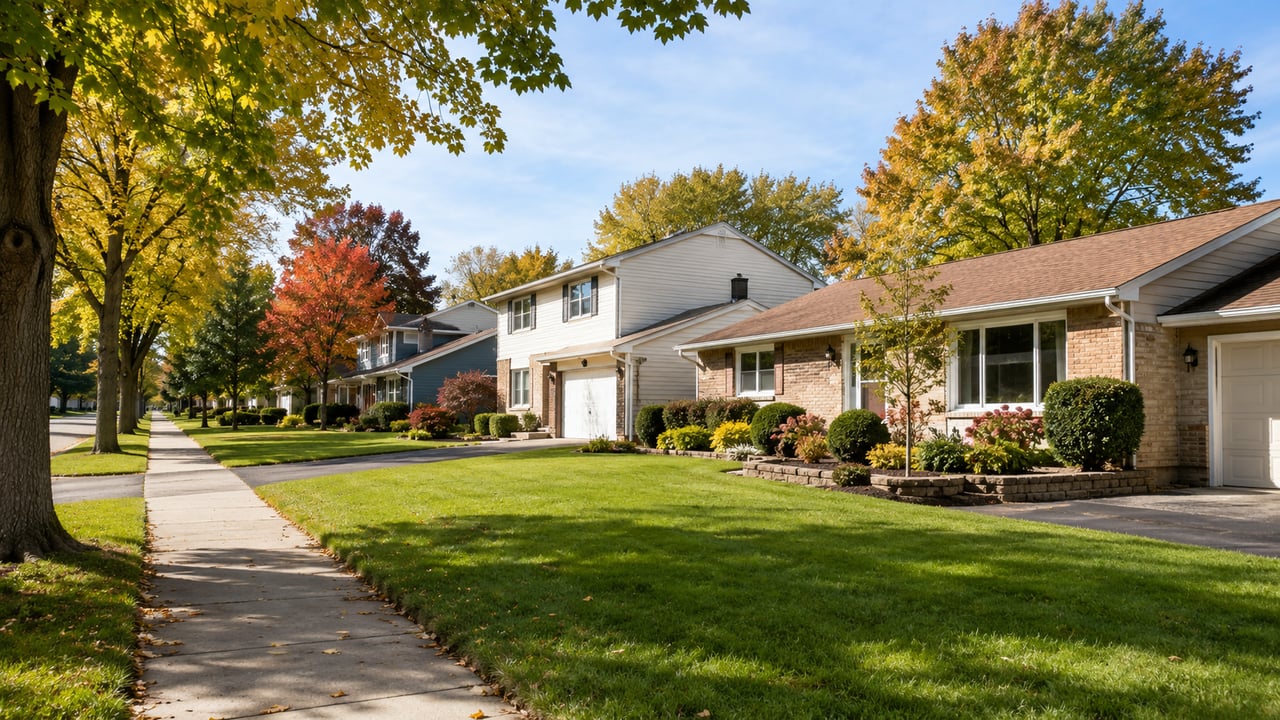
Mount Prospect is not a community where every block feels the same. You will find 1920s Tudors near downtown, mid-century ranches on curving streets, condos built around a golf course, and newer construction on the north end. Two homes at the same price can offer very different lives depending on where they sit.
Key Takeaways
- Prospect Manor is the village's 1920s Tudor Revival core near downtown, though many homes trading under that name are actually mid-century.
- Forest River began as unincorporated farmland in the 1930s and still feels wooded and tucked away near the Des Plaines River.
- Lions Park and Westgate are the classic single-family neighborhoods, largely built out in the 1960s.
- Old Orchard and Colony Country sit around the golf course and are mostly condos and townhomes. They fall in Prospect Heights District 23 and feed John Hersey High School.
- Downtown and Village Centre offer condo living within walking distance of the Metra station, which opened in 1930.
- Six elementary districts serve Mount Prospect. Neighborhood names do not determine school assignment, and some streets are split between attendance areas.
Are Mount Prospect Neighborhood Boundaries Official?
Some are. Many are not, and this matters more here than in most suburbs.
Mount Prospect has formal subdivisions, informal neighborhood names, homeowners associations, condominium communities, and broader areas that residents describe by a nearby school, park, road, or landmark. Names like Boxwood, Camelot, Prospect Place, and Northwest Meadows show up regularly in local conversation even though they are not always used consistently in MLS listings.
MLS subdivision fields are not always entered the same way from one listing to the next. One property may carry a formal subdivision name while a nearby home is marked "none" or listed under a broader area. In Mount Prospect, only about four in ten closed sales carry any subdivision name at all.
For that reason, neighborhood boundaries, school assignments, and sales data should be verified by address rather than relying on the subdivision field in an online listing.
Prospect Manor
Prospect Manor is one of Mount Prospect's most historically distinct neighborhoods, centered around S. Wa Pella Avenue near downtown.
The subdivision was developed in the 1920s by the H. Roy Berry Company during a period when Tudor Revival architecture, known for its high-peaked roofs and partially exposed wood framing, was popular across the Chicago area. The homes on the 300 block of S. Wa Pella Avenue were the first built in the subdivision and remain the most concentrated collection of Tudor-style architecture in the village, according to the Mount Prospect Historical Society.
What the Homes Are Like
Buyers may find:
- Tudor Revival cottages, some with later additions
- Traditional two-story homes
- Bungalows
- Homes with updated systems behind original facades
- Properties with varying levels of renovation
One thing worth knowing before you search: the 1920s Tudors are a specific, small core. Homes that trade under the Prospect Manor name in the MLS run considerably newer, with a median year built in the mid-1950s. If you are searching listings and finding ranches rather than Tudors, you are not in the wrong place. The name covers more ground than the original blocks.
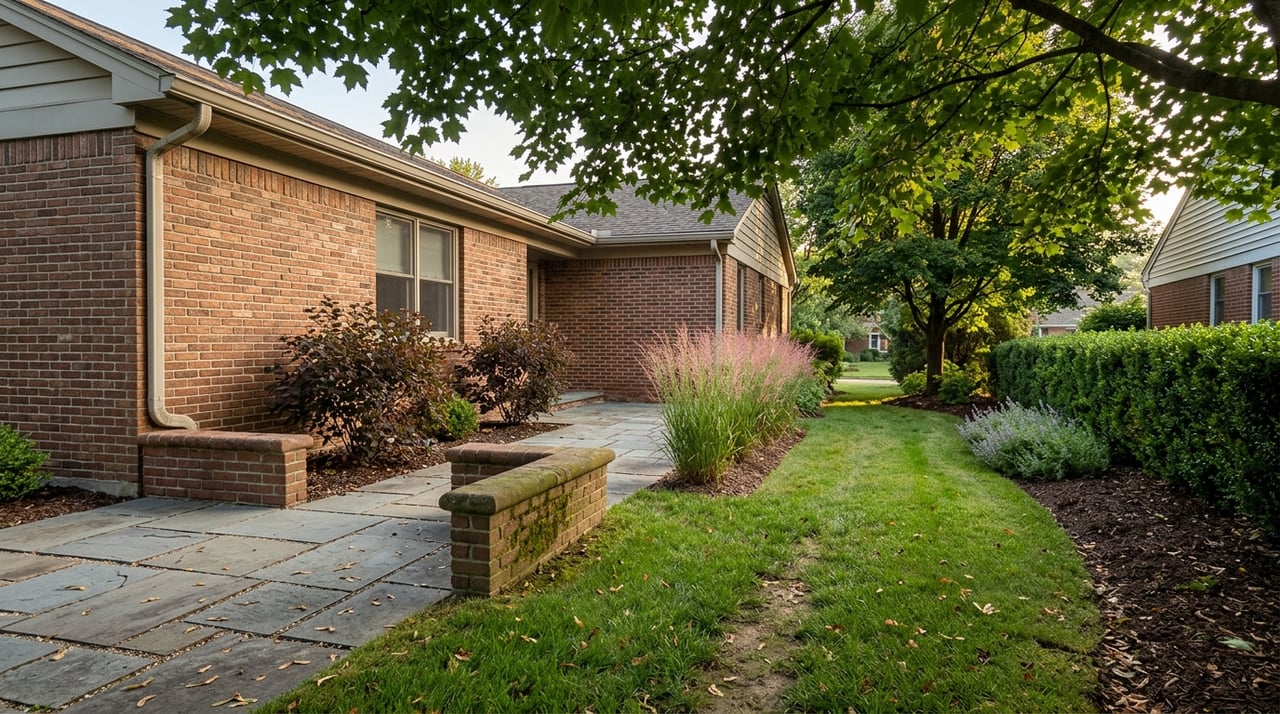
Because many homes here are close to a century old, condition varies significantly from one property to the next. A well-maintained original may look similar from the street to one with deferred maintenance, so what's behind the walls matters more than curb appeal.
Schools and Location
Prospect Manor sits close to downtown Mount Prospect and the Metra station at 13 E. Northwest Highway, making it one of the more walkable historic pockets in the village. Homes here generally attend Fairview Elementary in District 57 and Prospect High School.
Verify by address, though, and here is a good reason why: Wa Pella Avenue itself is split between attendance areas. Some of it sits in the Fairview area and some in the Lions Park area. The street that defines the neighborhood does not sit in a single school zone.
What Buyers Should Consider
Because many homes date to the 1920s through the 1950s, pay close attention to:
- Roof and window age
- Electrical service
- Plumbing materials
- Foundation and drainage
- Permit history for additions
- Insulation and energy efficiency
- Property taxes and exemptions
A century-old home that has been carefully updated is a very different purchase from a similar-looking home that hasn't been touched in decades. Our guide to shed and detached garage permits in Mount Prospect covers what unpermitted work looks like when it surfaces during a sale.
Forest River
Forest River is one of the village's oldest and most storied neighborhoods, originally an unincorporated subdivision formed from farmland subdivided in the 1930s.
According to the Mount Prospect Historical Society, the area was nicknamed "Mudville" because it was one of the last subdivisions in the area to get paved roads. It was also once home to Prohibition-era figure Roger Touhy, whose house along River Road reportedly included escape tunnels leading into the nearby forest preserve.
What the Homes Are Like
- Ranch homes
- Split-levels
- Cottages and cabins from the neighborhood's earliest development
- Homes that have been substantially expanded or rebuilt over time
Location
The neighborhood sits near the forest preserve system along the Des Plaines River, giving it a wooded, tucked-away feel that's different from the rest of the village.
What Buyers Should Consider
Given the neighborhood's age and its unincorporated origins, confirm:
- Sewer and septic history
- Well versus municipal water on older properties
- Flood zone status, given the proximity to the river
- Permit history
- Foundation and drainage conditions
Lions Park
Lions Park is one of Mount Prospect's most recognizable neighborhoods, largely built out in the early 1960s and named for the park that anchors it.
What the Homes Are Like
- Ranch homes
- Split-levels and raised ranches
- Traditional two-story homes
- Some of the larger and higher-value properties in the village
Home sizes here range widely, and larger or updated properties in Lions Park can reach well above the village's typical price point.
Schools and Location
Lions Park Elementary School is at 300 E. Council Trail, part of District 57, with Fairview Elementary and Westbrook School for Young Learners also serving nearby areas. The neighborhood is close to downtown, local parks, and everyday shopping along Elmhurst Road.
The park itself is currently mid-rebuild. Our Mount Prospect parks and recreation guide covers exactly what is open and what is fenced during construction.
What Buyers Should Consider
- Roof, window, and mechanical system age
- Previous additions and their permit history
- Basement moisture and drainage
- Property taxes, which can run higher on larger Lions Park homes
Old Orchard and Colony Country
This area in north Mount Prospect grew up around what is now the Mount Prospect Golf Club, opened in 1926 as the Northwest Hills Country Club by developer Axel Lonnquist. The course was later known as the Mount Prospect Country Club before becoming the public club it is today. Nearby, the separate Old Orchard Country Club sits just across the border at 700 W. Rand Road.
What the Homes Are Like
This is primarily attached housing, and the two communities are from different eras:
- Colony Country, condos and townhomes built roughly between 1973 and 1990, sitting north of Euclid Avenue and east of Rand Road along the golf course
- Old Orchard, a newer group built largely between 1989 and 1999
- Golf-course-adjacent single-family homes in the surrounding streets
That fifteen-year gap matters. A 1974 building and a 1991 building differ in layouts, systems, and where their reserve funds are in the replacement cycle.
Schools and Location
This is the part of the village most often misunderstood. Homes here are served by Prospect Heights School District 23, not District 57, and attend Dwight D. Eisenhower or Betsy Ross elementary schools. High schoolers attend John Hersey High School rather than Prospect.
If school assignment is part of your decision, this area is a genuine outlier within Mount Prospect and worth confirming carefully.
What Buyers Should Consider
For condo and townhome buyers specifically, review:
- HOA fees and reserve funding
- Special assessments
- Rental restrictions
- Exterior maintenance responsibilities
- Golf course views versus golf course noise and foot traffic
Downtown Mount Prospect and Village Centre
Downtown offers a different experience from the village's traditional subdivisions. The area is built around the Metra station at 13 E. Northwest Highway, which opened in 1930 and serves the Union Pacific Northwest Line, along with restaurants, small businesses, and community events like the annual Downtown Block Party.
Housing Near Downtown
- Village Center Condos, a seven-story building completed in 2002 with over 200 units
- Clocktower Condominiums at 10 S. Wille St., a six-story building completed in 1996
- Smaller vintage homes on surrounding streets
- Newer infill and redevelopment projects
What Buyers Should Consider
Living near downtown can also mean more activity. Before purchasing, consider:
- Train noise
- Parking availability, for residents and guests
- HOA fees and reserve funding
- Special assessments
- Proximity to restaurants and evening foot traffic
- The actual walking route to the station
"Walkable to Metra" can mean a five-minute walk from one building and a much longer trip from another. Our guide to commuting from Mount Prospect to Chicago covers trip times, station parking costs, and whether you will actually get a spot.
Westgate
Westgate is one of the larger residential pockets on the west side of the village, generally centered around N. Wolf Road and E. Central Road.
What the Homes Are Like
Westgate is largely a single-family neighborhood, with:
- Ranch homes
- Split-levels
- Traditional two-story homes
- Consistent block layouts typical of Mount Prospect's mid-century growth years
What Buyers Should Consider
As in other established Mount Prospect neighborhoods, condition and renovation level vary considerably from block to block, so a walkthrough of the mechanical systems, roof, and foundation matters more than the listing photos.
North Mount Prospect: Euclid Corridor, Prospect Meadows, and Harvest Heights
North Mount Prospect, generally the area around Euclid Avenue, Camp McDonald Road, and Wolf Road, includes some of the village's newer and more varied housing stock, from HOA-governed communities like Harvest Heights to custom builds in Camelot and condos in Creekside.
What the Homes Are Like
- HOA-managed single-family subdivisions
- Custom and semi-custom homes
- Condo and townhome communities
- A generally newer mix of construction than the village's historic core
Schools and Location
This part of the village is closer to River Trails Middle School at 1000 N. Wolf Road, Euclid Elementary at 1211 N. Wheeling Road, and Indian Grove Elementary at 1340 N. Burning Bush Lane, all part of River Trails School District 26.
What Buyers Should Consider
For HOA communities, review the association's fees, reserves, and rules before writing an offer. For custom-built or older homes in this area, confirm permit history on any additions or major renovations.
Which School District Serves My Mount Prospect Address?
It depends entirely on the address. Six elementary districts serve portions of Mount Prospect:
- Mount Prospect School District 57, including Fairview and Lions Park
- Community Consolidated School District 59, including Robert Frost, John Jay, and Forest View
- River Trails School District 26, including Euclid and Indian Grove
- Prospect Heights School District 23, including Dwight D. Eisenhower and Betsy Ross
- Community Consolidated School District 21 (Wheeling), covering a northern portion
- Arlington Heights School District 25, covering a small portion
High schoolers attend a Township High School District 214 school, which may be Prospect, John Hersey, Rolling Meadows, or Wheeling depending on the boundary. The Village of Mount Prospect publishes a school district map.
Because neighborhood names don't guarantee a school assignment, and because some streets are split between attendance areas, always verify assigned schools directly with the relevant district using the exact address. Our guide to verifying school boundaries before buying walks through how.
How Do I Compare Mount Prospect Neighborhoods?
The right neighborhood isn't automatically the one with the largest house or the shortest distance to a school.
Test the commute
Drive to work during your normal commuting hours. For train commuters, check the current Metra schedule, station parking, and the walking or driving route to the station.
Visit more than once
Drive through during the morning commute, after school, in the evening, and on a weekend. That reveals traffic, parking, and noise patterns a single showing will not.
Compare the entire monthly cost
Include mortgage, property taxes, insurance, HOA fees, utilities, commuting costs, and planned improvements. A lower purchase price doesn't always mean a lower cost of ownership. Our Mount Prospect cost of living guide breaks down median prices and tax bills by school attendance area, where the differences are larger than most people expect.
Research the specific property
For an older Mount Prospect home, especially in Prospect Manor or Forest River, investigate permit history, tax history and exemptions, sewer condition, roof and window age, foundation condition, and previous additions.
Which Mount Prospect Neighborhood Is Right for You?
Mount Prospect offers several different ways to live.
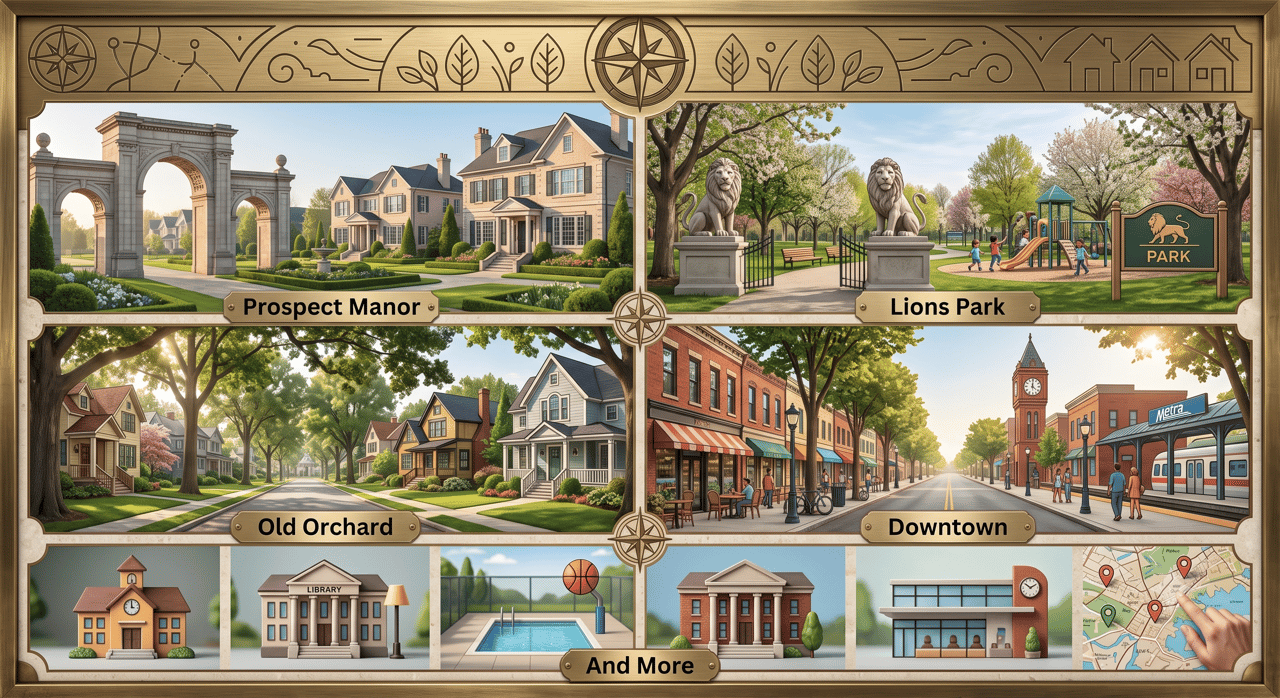
Prospect Manor and Forest River provide historic character, close to downtown or tucked near the forest preserve. Lions Park and Westgate offer broad, established single-family living. Downtown and Village Centre give you Metra access and a walkable setting. Old Orchard and Colony Country sit around the golf course with a different school district than most of the village. North Mount Prospect offers newer construction and HOA-managed communities.
The best choice depends on what you need day to day: how much maintenance you want to take on, how often you'll use the Metra, whether you want an older home with character or something newer, and what monthly payment feels comfortable once taxes and HOA fees are in.
To go deeper, see our guide to Mount Prospect's most charming historic neighborhoods, the complete guide to living in Mount Prospect, or Arlington Heights vs Mount Prospect if you're weighing the village against a neighbor.
Want Help Narrowing It Down?
Neighborhood names only get you so far here, and as you have probably gathered, they are less reliable in Mount Prospect than in most suburbs.
Send me the areas you're considering and I'll tell you what actually differs between them: which school district each address falls in, how the tax bills compare, which blocks sit under a flight path, and what your budget realistically reaches in each. That is a short conversation and it saves people from ruling out the right neighborhood for the wrong reason.
Book a call at tinyurl.com/talk2mari
I also share neighborhood tours on my YouTube channel, Life in the NW Burbs, which is a low-pressure way to see these areas before visiting. Email works too: [email protected]. The full guide library is at MyRealtorMari.com.
Frequently Asked Questions About Mount Prospect Neighborhoods
What are some of the best-known neighborhoods in Mount Prospect?
Recognizable neighborhoods and subdivisions include Prospect Manor, Forest River, Lions Park, Old Orchard, Colony Country, Westgate, downtown Mount Prospect, and the north Mount Prospect communities around Euclid Avenue. The right choice depends on property type, budget, commute, school boundaries, and location within the neighborhood.
Where is Prospect Manor in Mount Prospect?
Prospect Manor is centered around S. Wa Pella Avenue near downtown. It was developed in the 1920s by the H. Roy Berry Company and is known for its Tudor Revival architecture, though homes trading under the name today range well into the mid-century.
Are Mount Prospect neighborhood boundaries official?
Some subdivisions have recorded plats or homeowners associations, but many neighborhood names are used informally or inconsistently in MLS listings, where only about four in ten Mount Prospect sales carry any subdivision name. Confirm the legal subdivision, association, and school boundaries using the specific address.
Which school district serves the Mount Prospect golf course area?
Old Orchard and Colony Country fall in Prospect Heights School District 23, attending Dwight D. Eisenhower or Betsy Ross elementary schools and John Hersey High School. That differs from most of Mount Prospect, so it is worth confirming if school assignment matters to your decision.
Which Mount Prospect neighborhoods are closest to Metra?
Downtown Mount Prospect and nearby streets, including parts of Prospect Manor and Prospect Place, generally offer the closest access to the station at 13 E. Northwest Highway, which opened in 1930. Walking distance varies considerably by building.
Is most of Mount Prospect's housing older?
Much of it, yes. Prospect Manor dates to the 1920s, Lions Park and Westgate largely to the 1960s, and Colony Country to the 1970s and 1980s. North Mount Prospect, Old Orchard, and some downtown condo buildings offer newer construction.
What should I check before buying in a Mount Prospect HOA?
Review the declaration, budget, reserves, insurance coverage, meeting minutes, pending litigation, special assessments, rental restrictions, and maintenance responsibilities. Have your attorney review association documents during the contract-review period.
About the data: Housing vintage and school attendance figures reflect MLS closed sales in Mount Prospect between February 2025 and July 31, 2026. Neighborhood history is drawn from the Mount Prospect Historical Society. Subdivision names in the MLS are entered inconsistently and appear on roughly 39% of local sales, so all boundaries and school assignments should be verified by address. Updated quarterly.
About the Author
Mari Van Meter is a REALTOR® with the Dragonfly Home Team at Berkshire Hathaway HomeServices American Heritage Real Estate, serving Arlington Heights, Palatine, Mount Prospect, Buffalo Grove, Wheeling, and the surrounding Northwest Suburbs of Chicago. She holds the C2EX, SRES, PSA, and ABR designations. Much of her work is with homeowners navigating a divorce, a downsize, or a relocation, and she has spent enough time in Mount Prospect's records to know which neighborhood names mean something and which ones just sound like they do. More at MyRealtorMari.com and about Mari.