Arlington Heights is best explored through three history-rich walking areas: the museum and downtown core, Scarsdale, and the older residential streets near Pioneer Park. Only the museum area has clearly documented historic landmarks, but all three let you notice how the village grew through its homes, street patterns, parks, and gathering places.
Key Takeaways
- Start at the Arlington Heights Historical Museum for the clearest connection to documented village history.
- Walk the nearby downtown residential blocks to see older homes beside newer infill and a modern village center.
- Choose Scarsdale for a calm residential walk with mature trees, varied architecture, and gently curving streets.
- Explore the blocks near Pioneer Park to see an established neighborhood woven around a long-standing community park.
- Treat these as suggested walking areas, not a list of officially designated historic districts.
Sometimes the best way to understand Arlington Heights is to slow down.
A house-by-house tour shows details that disappear from a car: deep front porches, original brickwork, mature trees, smaller early homes beside thoughtful additions, and the way a park or train station shapes the blocks around it. These walks are less about checking off landmarks and more about seeing how the village changed over time.
Are These Official Historic Districts?
No. This guide uses “historic neighborhoods” in the everyday sense: older parts of Arlington Heights with visible architectural character or a strong connection to local history. It does not mean every route is a locally or nationally designated historic district.
That distinction matters. The Arlington Heights Historical Museum provides documented history for its campus and the Müller family. In the residential areas, individual home ages and histories vary from block to block. If you need the history of a specific property, check official records rather than relying on appearance alone.
1. The Historical Museum and Downtown Core
Why Is the Museum and Downtown Area the Best Place to Begin?
This is the strongest starting point because it combines documented historic buildings with an easy walk into downtown Arlington Heights. The route connects the village’s early commercial story, residential streets, civic spaces, and present-day downtown in a compact area.
Begin at the Arlington Heights Historical Museum at 110 W. Fremont Street. The museum campus includes the 1882 home of Frederick W. Müller and the 1908 Banta House. The Park District’s museum history explains that Müller arrived in the community, then known as Dunton, in 1872 and built the home and soda factory at North Vail Avenue and West Fremont Street in 1882.
From the museum, walk south toward the Metra station and downtown. Wander the residential blocks on Vail, Dunton, and nearby side streets before reaching Campbell Street. You will see a layered streetscape rather than a frozen period display, which is part of what makes this walk useful. Arlington Heights history is still mixed into everyday life.
Suggested route: Start at the museum campus, walk south on Vail toward downtown, loop through Campbell Street and Harmony Park, then return north on Dunton or a parallel residential street. The exact distance depends on the side streets you choose.
Pair this walk with my guide to living near downtown Arlington Heights if you want a closer look at what daily life near the village center feels like.
2. Scarsdale
What Makes Scarsdale Worth Walking?
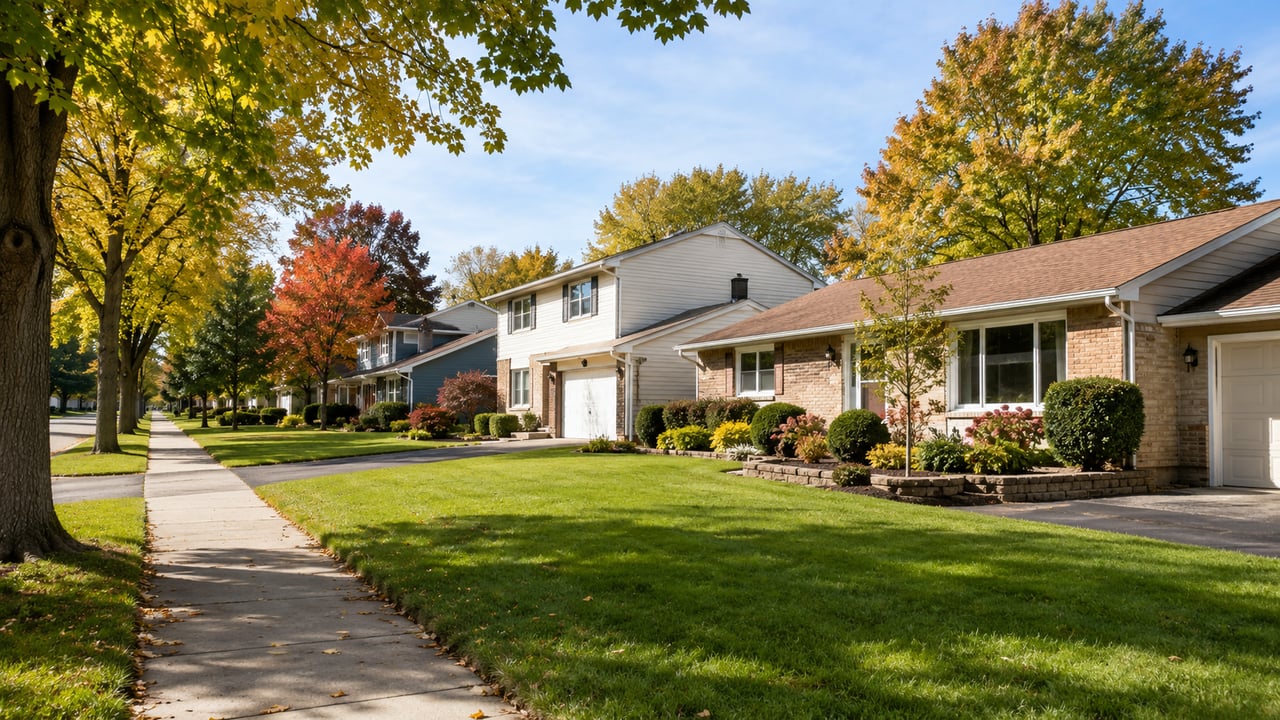
Scarsdale is worth walking for its settled residential feel, mature landscaping, curving streets, and mix of traditional home styles. It offers a very different experience from the straight street grid near downtown.
On foot, pay attention to rooflines, entryways, brick and stone details, setbacks, and how the homes relate to the street. You may notice Tudor-inspired details, Colonial forms, ranch homes, and later renovations within the same broader area. The value of the walk is in the variety, not in assigning one architectural label to the whole neighborhood.
A simple approach is to choose a few connected residential streets south of downtown and make a loop rather than trying to cover the entire neighborhood. Scarsdale is a lived-in residential community, so stay on public sidewalks, keep voices low, and avoid photographing people or private spaces without permission.
For a broader comparison of this area with other parts of the village, see my Arlington Heights neighborhood guide.
3. The Pioneer Park Area
Why Walk the Streets Near Pioneer Park?
The Pioneer Park area is a good walk when you want to see how an established neighborhood and a community park fit together. The surrounding blocks include a range of home sizes, architectural eras, additions, and infill, all within a street network that feels connected to a shared public space.
Start near Pioneer Park and build a loose loop through the nearby residential streets. Look for smaller-scale details: front steps facing the sidewalk, mature shade trees, detached garages, additions that reveal how homes have changed, and sightlines that keep the park present as you move through the neighborhood.
This route is not a formal architectural tour, and the area should not be treated as a single historic period. Its interest comes from seeing several generations of suburban housing in one walk.
If parks are an important part of how you experience a community, my Arlington Heights parks and outdoor recreation guide adds more places to explore.
What Should You Look for on an Arlington Heights Architecture Walk?
You do not need to identify every architectural style to enjoy these walks. A few simple details can tell you a great deal about how a neighborhood evolved.
- Porches and entries: Are they designed for sitting, shelter, or a more formal arrival?
- Rooflines: Gables, dormers, broad eaves, and low profiles can help you see differences between building eras.
- Materials: Brick, stone, stucco, wood siding, and newer composites often show both original design and later changes.
- Setbacks and lot patterns: Notice whether homes sit close to the sidewalk or farther behind lawns and landscaping.
- Additions and infill: These reveal how homeowners adapted older properties to changing needs.
- Public anchors: Parks, schools, civic buildings, and the train station help explain why nearby blocks developed as they did.
How Can You Plan a Respectful Neighborhood Walk?
Choose daylight hours, use public sidewalks, and remember that these are people’s homes. Park legally, keep dogs leashed, take litter with you, and do not step onto private property for a closer look or a photograph.
For the museum route, check current museum hours before you go. The Illinois Office of Tourism lists the campus at 110 W. Fremont Street and notes that building tours are offered on Saturdays, but schedules can change. Confirm details with the museum before planning your visit.
What Do These Walks Reveal About Living in Arlington Heights?
Together, these routes show that Arlington Heights is not one uniform suburban landscape. The village includes a historic commercial core, older residential grids, curving neighborhood streets, community parks, and newer homes inserted into long-established blocks.
That variety matters if you are thinking about moving here. Two homes with the same Arlington Heights mailing address can offer very different relationships to downtown, parks, lot size, architecture, traffic, and everyday errands. Walking a neighborhood gives you information that listing photos cannot.
If you are beginning that comparison, start with my full guide to living in Arlington Heights and then spend time in the areas that feel most aligned with your routine.
About Mari Van Meter
Mari Van Meter is a REALTOR® with the Dragonfly Home Team at Berkshire Hathaway HomeServices American Heritage Real Estate. With C2EX, SRES®, PSA, and ABR® designations, she serves Chicago’s Northwest Suburbs and helps homeowners move through divorce, downsizing, relocation, and other major life changes with clarity and care. Her work combines local knowledge with a calm, structured approach and emotional awareness. Learn more at MyRealtorMari.com.
Ready to Explore Arlington Heights More Closely?
A neighborhood walk can help you notice what matters to you before you begin comparing homes. If you want help turning those observations into a thoughtful home search, book a conversation with Mari or visit MyRealtorMari.com. There is no pressure, just a chance to make the next step clearer.
Follow-Up Questions
Where Should I Start a Historic Walk in Arlington Heights?
Start at the Arlington Heights Historical Museum at 110 W. Fremont Street. Its campus includes the documented 1882 Müller home and 1908 Banta House, and it is close enough to downtown to combine local history, residential streets, and the village center in one outing.
Does Arlington Heights Have an Official Historic District?
This article does not treat these routes as officially designated historic districts. It identifies older, history-rich walking areas. For the status or history of a specific property, confirm the information through the Village, the Historical Museum, or official property records.
Can I Tour the Arlington Heights Historical Museum Buildings?
The Illinois Office of Tourism lists Saturday building tours, but hours and tour schedules may change. Check directly with the Arlington Heights Historical Museum before your visit, especially if the buildings are the main reason for your trip.
Which Arlington Heights Neighborhood Is Best for Architecture?
The museum and downtown core offers the clearest documented history. Scarsdale is better for a calm walk through varied traditional architecture and mature landscaping, while the Pioneer Park area shows how different generations of housing developed around a community park.
Is Downtown Arlington Heights Easy to Combine With a Neighborhood Walk?
Yes. The Historical Museum is north of the downtown core, so you can walk between the museum campus, nearby residential blocks, the Metra area, Campbell Street, and Harmony Park. Choose your side streets based on the time and distance you want.
How Do I Research the History of a Specific Arlington Heights Home?
Start with official property records to verify the construction year, then contact the Arlington Heights Historical Museum for local archives or guidance. Architectural appearance alone is not enough to confirm a home’s age, original design, or historical importance.