Updated: August 24, 2026
Before writing an offer on an Illinois home, buyers need a written mortgage pre-approval, a full monthly budget beyond principal and interest, a review of recent comparable sales, and a basic understanding of contract terms like earnest money, contingencies, and attorney review. Getting these in place first turns a stressful decision into a grounded one.
An offer is a legal document. When you understand the numbers and the protections before emotions run high, the process feels much more manageable.
Key Takeaways
- A written pre-approval carries more weight with sellers than a basic pre-qualification.
- Your monthly housing cost may include taxes, insurance, mortgage insurance, and association fees — not just principal and interest.
- Earnest money amounts vary and should be chosen with the contract terms in mind, not just to look competitive.
- Illinois residential contracts commonly address attorney review, inspection, financing, and appraisal.
- Price matters, but timelines, financing strength, and contingency terms matter too.
- Set your walk-away number before negotiations begin, not while you’re responding to a counteroffer.
- Recent market data is a starting point. The specific home’s location, condition, and competition matter more.
Why Does Writing an Offer Feel So High-Stakes?
Writing an offer feels high-stakes because it’s the moment a search turns into a legal commitment, often after weeks or months of looking. That shift — from “what if” to “what now” — is where most buyers feel the most pressure.
You may have been searching for weeks or even months. Then you walk into a home and something clicks. The layout works. The location feels right. You can picture your life there.
Then someone asks, “Are you ready to write an offer?”
That is when many buyers freeze. You may wonder:
- Is this the right price?
- What if I offer too much?
- What if another buyer gets it?
- What happens if the inspection finds a problem?
- What am I actually agreeing to in the contract?
This part of the process can feel emotional, but it does have a structure. There are normal timelines, clear decision points, and contract protections that may apply. Let’s walk through what to understand before you sign.
What Kind of Pre-Approval Do I Need Before Writing an Offer?
You need a written pre-approval, not just a pre-qualification, before writing an offer in Illinois. Sellers weigh a strong written pre-approval seriously, especially when more than one buyer is interested in the same home.
A pre-qualification is often an early estimate based on information you provide. It can help you begin the conversation, but it may not involve a full review of your financial documents.
A written pre-approval generally means a lender has reviewed more of your financial information — income, assets, credit, employment, and debt.
Before writing an offer, confirm that your lender understands:
- Illinois contract and closing timelines
- Local property taxes
- Escrow requirements
- Your loan program
- The expected closing date
This is especially important in Cook County, where property taxes can have a major effect on your monthly payment.
What Numbers Do I Need to Know Before Making an Offer?
You need three numbers before you negotiate: your offer price, your realistic monthly payment, and your walk-away number. All three should be settled before you’re in a live negotiation, not during one.
Your Monthly Payment
Your monthly housing cost may include:
- Principal and interest
- Property taxes
- Homeowners insurance
- Mortgage insurance, when required
- Association fees
- Special assessments, when applicable
In the Northwest Suburbs, property taxes can be a significant part of the monthly payment. Do not build your budget around principal and interest alone.
Review the exemptions currently applied to the property’s tax bill. The current owner may receive a Homeowner Exemption, Senior Exemption, Senior Freeze, or another exemption tied to their situation — not yours. That means the tax bill shown online may not reflect what you’ll actually pay. You can review current exemption programs through the Cook County Assessor’s Office.
Your Walk-Away Number
Your walk-away number is the highest price at which the home still makes sense for your budget and your life. Set this number before negotiations begin — not after you’re already responding to a counteroffer or worried about losing the home. This one decision can help you stay grounded when emotions are running high.
What Is Included in an Illinois Home Purchase Offer?
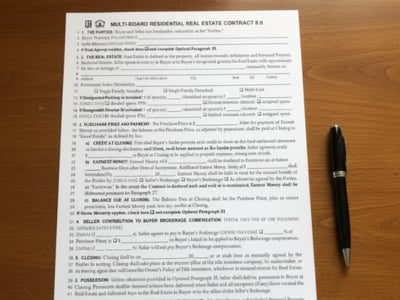
An Illinois offer includes more than the purchase price — it also sets the earnest money, closing date, and closing cost terms. In the Chicago area, many transactions use a version of the Multi-Board Residential Real Estate Contract, and each of these terms is negotiable.
Purchase Price
Your offer should be based on the specific property and recent comparable sales, not just the listing price. Your agent may review homes that recently sold with similar:
- Locations
- Housing styles
- Square footage
- Lot sizes
- Bedrooms and bathrooms
- Conditions and updates
A home listed at $400,000 is not automatically worth $400,000. Some homes are priced above market. Some are priced close to expected value. Others are listed lower to encourage competition. The right strategy depends on the individual home.
Earnest Money
Earnest money is a good-faith deposit that shows the seller you are serious about the purchase. The amount, due date, and escrow holder are written into the contract. Local customs vary, and the right amount depends on the price, property, and strength of the offer.
A few things to understand:
- Earnest money is generally held in escrow.
- It is usually credited toward your purchase at closing.
- It may be refundable when the contract allows you to cancel.
- You may risk losing it if you fail to follow the contract without a protected reason.
A larger earnest money deposit may make an offer look stronger, but it should not be increased casually. Understand what is at risk under the contract before agreeing to the amount.
Closing Date
The closing date is when ownership transfers from the seller to the buyer. According to ICE Mortgage Technology’s Mortgage Monitor report, the national average time to close a purchase loan was 36.8 days as of March 2026 — the fastest pace since ICE began tracking the metric. Illinois purchases commonly close within a similar 30- to 45-day window, though the actual timeline depends on your lender, loan type, and the property itself. For the full sequence from offer to keys, see the Illinois home-buying timeline.
A seller may want a quick closing. Another seller may need additional time to move. When possible, matching the seller’s preferred timeline can strengthen an offer without increasing the purchase price.
Closing Costs
Buyer closing costs may include:
- Lender fees
- Appraisal fees
- Attorney fees
- Title-related charges
- Recording fees
- Prepaid insurance
- Prepaid taxes
- Escrow deposits
Your lender should provide a Loan Estimate showing the expected costs. Read it carefully. Ask questions about anything that does not make sense. You are not expected to understand every line without help.
What Contract Protections Should I Understand Before Signing?
Illinois offers commonly include four contract protections: inspection, financing, appraisal, and attorney review. Each one is negotiable, and the exact language matters, so review every contingency with your agent and attorney before signing.
Inspection Contingency
An inspection contingency may give you time to inspect the home and respond to material concerns discovered during the inspection period. Inspection and attorney-review timelines can overlap in Illinois transactions — your attorney and agent can explain the deadlines in your specific contract.
Do not waive inspection rights lightly. Without an inspection contingency, you may be accepting unknown problems with limited ability to use those findings under the contract.
In some competitive situations, buyers consider a pre-offer inspection — inspecting the property before submitting the offer, with the seller’s permission. A pre-offer inspection does not remove every risk, but it may provide more information before you decide on the offer terms.
Financing Contingency
A financing contingency may protect you if the loan cannot be approved under the terms stated in the contract. Pre-approval is only the beginning. Final approval usually happens after underwriting, appraisal, and review of the specific property.
After going under contract:
- Do not open new credit cards.
- Do not finance furniture or appliances.
- Do not purchase a vehicle without speaking to your lender.
- Do not move large amounts of money without documentation.
- Do not change jobs without discussing it with your lender.
Even a small financial decision can affect loan approval.
Appraisal Contingency
When you use mortgage financing, the lender will usually order an appraisal. If the property appraises below the contract price, the next steps depend on the contract and the parties’ willingness to renegotiate. Possible outcomes may include:
- The seller reduces the price.
- The buyer contributes additional cash.
- The parties split the difference.
- The buyer uses rights available under the contract.
Some buyers offer appraisal gap coverage — agreeing to contribute a set amount of additional cash if the appraisal comes in below the purchase price. This can strengthen an offer, but it also increases risk. Only offer appraisal gap coverage when you understand the terms and have the funds available.
Attorney Review
Attorney review is a normal part of many Illinois residential real estate transactions. After the contract is signed, the attorneys may review the agreement and request permitted modifications within the contract timeline.
Your attorney can help:
- Review contract language
- Clarify legal terms
- Address inspection concerns
- Review title matters
- Protect your interests through closing
Attorney review is not a sign that something is wrong. It is part of the process.
Does Price Matter Most When Making an Offer?
Price matters, but it isn’t the only thing a seller weighs. A strong offer may include:
- A solid pre-approval letter
- Proof of available funds
- A meaningful earnest money deposit
- A workable closing date
- Clear timelines
- Complete documents
- Thoughtful contingency terms
- Flexibility where it makes sense
A complete, organized offer can give the seller more confidence that the transaction is likely to close.
Should I Use an Escalation Clause?
An escalation clause states that you will increase your offer above another competing offer by a set amount, up to a maximum price. For example, you might offer $500,000 and agree to increase the price by $2,000 above another acceptable offer, up to a maximum of $515,000.
This can be useful in some situations, but it also reveals your maximum price. Before using an escalation clause, make sure the maximum still fits your budget and walk-away number. Do not use one only because you are afraid of losing the home.
What Happens After My Offer Is Accepted?
Once the seller accepts your offer, the process moves through attorney review and inspection, appraisal and underwriting, mortgage commitment, and closing preparation — typically in that order, though your contract may differ.
Early Contract Period: Attorney Review and Inspections
Your attorney reviews the contract, and you schedule the home inspection and any additional testing. Possible inspections may include:
- General home inspection
- Radon testing
- Sewer scope
- Chimney inspection
- Pest inspection
- Specialist evaluations based on the home’s condition
Schedule inspections promptly so there is enough time to review the results before the contract deadlines.
Appraisal and Underwriting
Your lender orders the appraisal and continues reviewing your financial documents. You may be asked for updated bank statements, pay stubs, explanations, or other records. Respond as quickly as possible to avoid delays.
Mortgage Commitment
The lender works toward the mortgage commitment or other financing milestone required by the contract. Continue avoiding major financial changes until after closing.
Closing Preparation
The lender, title company, attorneys, and agents coordinate the final details. You will generally review closing documents, arrange funds, confirm insurance, and complete a final walk-through shortly before closing.
Many delays happen because someone is waiting on a document, signature, or answer. Staying organized can make this stage much easier.
What Commonly Catches Buyers Off Guard?
The Listing Price Is Not Always the Market Value
A listing price is part of the seller’s marketing strategy. It is not an independent guarantee of value. Comparable sales, current competition, condition, and location provide more useful context.
The Current Tax Bill May Not Be Your Future Bill
The current owner may receive exemptions that will not continue after the sale. A senior exemption, Senior Freeze, or other benefit can make the current bill look lower than what a future owner may pay. Review the property’s assessment, exemptions, and tax history before making an offer.
School Boundaries Need to Be Verified With the District
Do not rely only on listing portals for school information. School district boundaries can be complicated in the Northwest Suburbs, especially where elementary, middle, and high school districts overlap. Verify the exact property address directly with the appropriate district before making a decision based on school assignment. For a broader look at how district lines work across the area, see the Northwest Chicago Suburbs school districts guide.
Down Payment Assistance Requires Early Planning
If you’re considering down payment assistance, speak with an approved lender early — not after you find the home. The Illinois Housing Development Authority (IHDA) offers several homebuyer assistance programs, including IHDAccess Home, which launched in March 2026. Program amounts, income limits, purchase-price limits, and lender requirements change, so confirm current terms directly with IHDA or an approved lender before you write an offer.
The Mindset That Helps Most
You are not making a rushed decision when you have already done the preparation. You are making an informed decision based on:
- Your budget
- Your pre-approval
- Comparable sales
- The home’s condition
- The contract terms
- Your walk-away number
That is very different from guessing. The goal is not to “win” the home at any cost. The goal is to buy the right home in a way that still feels financially and emotionally grounded after the excitement settles.
The Bottom Line Before You Write an Offer
Before writing an offer on an Illinois home, make sure you understand your numbers, contract protections, and strategy. A strong offer is not simply the highest offer. It is clear, complete, realistic, and aligned with your life.
When you understand the process, you can make decisions with more confidence and less panic. If you are getting close to the offer stage, I can help you review the comparable sales, terms, timelines, and strategy for the specific property.
Mari and the Dragonfly Home Team are committed to Equal Housing Opportunity and comply with the federal Fair Housing Act and the Illinois Human Rights Act. This article is for general education only and is not legal, tax, or financial advice — talk with an Illinois real estate attorney and your lender about your specific situation.
Frequently Asked Questions
How much earnest money should I offer in the Northwest Chicago Suburbs?
The amount depends on the purchase price, local custom, market conditions, and the specific offer strategy. The contract should clearly state the amount, deadline, and escrow holder. Understand when the money is refundable and what could place it at risk before agreeing to a larger deposit.
Which contingencies should I include in an Illinois home offer?
Common Illinois contract protections may address inspection, financing, appraisal, and attorney review. The right terms depend on the property, your financing, and the current market. Do not waive or shorten protections without understanding the risk.
What is attorney review in an Illinois home purchase?
Attorney review is a period after contract acceptance when the attorneys review the agreement and may request permitted changes. It is a normal part of many Illinois residential transactions, not a sign that something is wrong.
How long does it take to close on a home in Illinois?
Nationally, ICE Mortgage Technology reported an average purchase-loan closing time of 36.8 days as of March 2026. Many Illinois purchases close within roughly 30 to 45 days, though the timeline depends on the contract, lender, appraisal, inspection, attorney review, and title work.
Should I waive my inspection contingency to make my offer stronger?
Waiving inspection rights may make an offer look cleaner, but it also creates meaningful risk — you may be accepting unknown problems with fewer options under the contract. Discuss alternatives, including a shorter inspection period or a pre-offer inspection, with your attorney and Realtor.
What is an appraisal gap?
An appraisal gap occurs when the appraised value comes in lower than the contract price. Appraisal gap coverage means the buyer agrees to contribute a stated amount of additional cash if that happens. It can strengthen an offer, but only when the buyer understands the terms and has the funds available.