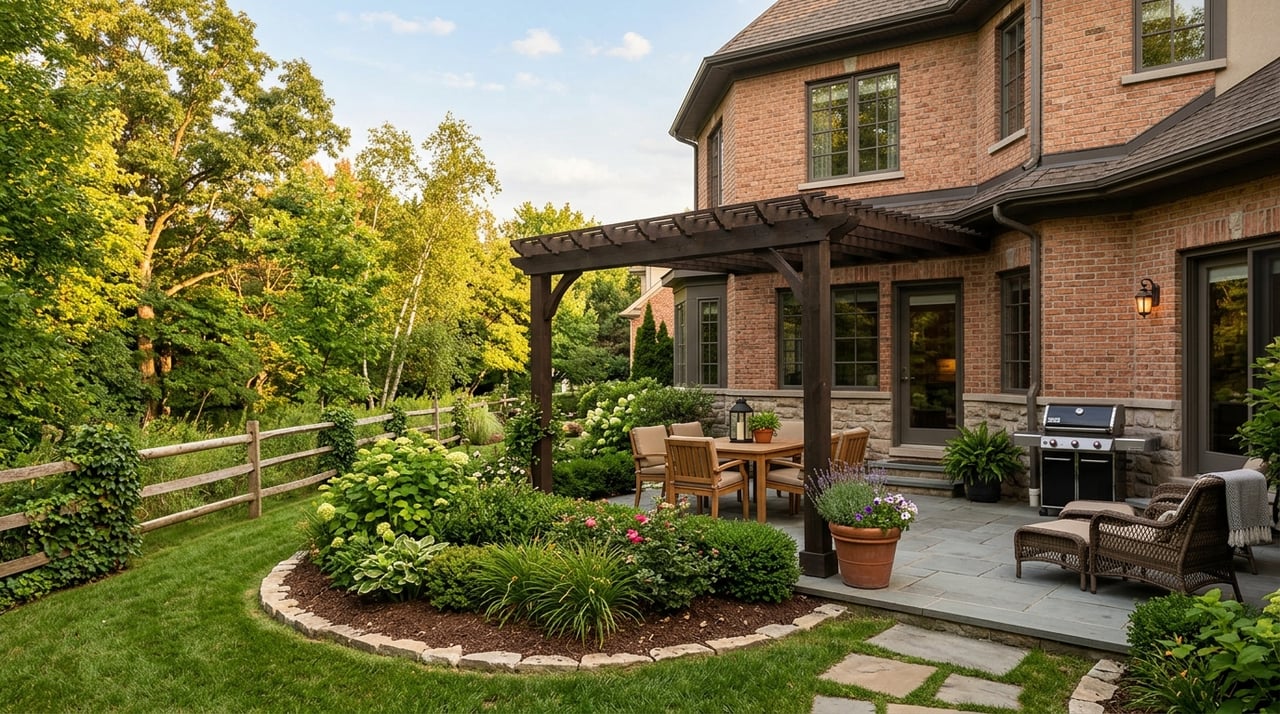
What homes actually sold for, why two-thirds of the market is townhomes and condos, and how daily life works in a village with several downtowns instead of one.
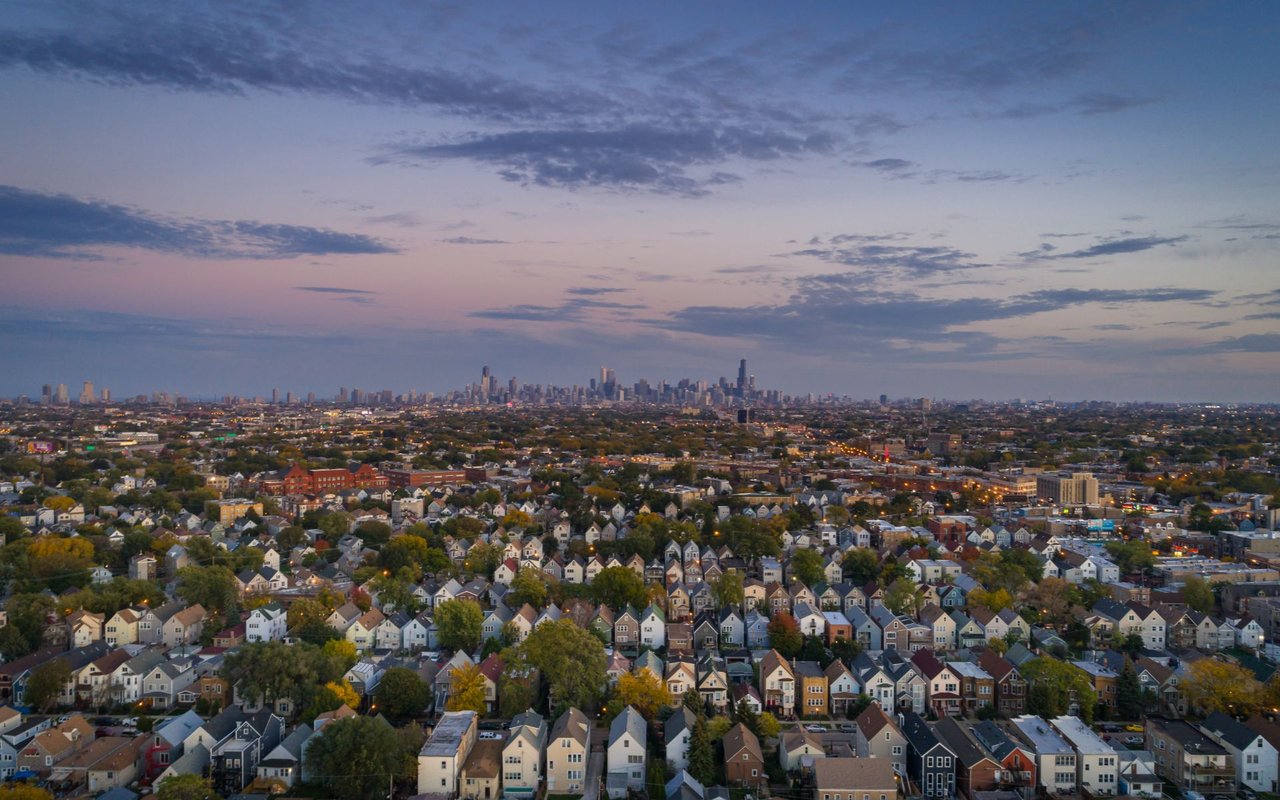
Schaumburg is a village of about 77,200 people roughly 30 miles northwest of downtown Chicago, organized around several hubs rather than one downtown. Over the year ending August 21, 2026, detached homes sold for a median of $475,000 and townhomes and condos for a median of $285,000. Two-thirds of all sales were attached homes.
Key Takeaways
- Schaumburg had an estimated population of 77,249 as of July 1, 2025, down slightly from the 78,723 counted in the 2020 census (U.S. Census Bureau).
- Over the 12 months ending August 21, 2026, 625 townhomes and condos sold at a median of $285,000 and 329 detached homes sold at a median of $475,000 (ConnectMLS).
- Attached homes were 65.5% of all sales. Schaumburg is a townhome and condo market first and a house market second.
- The median tax bill was $8,205 on a detached home and $4,490 on an attached home, roughly 1.68% and 1.64% of the sale price (ConnectMLS tax fields, mostly tax years 2023 and 2024).
- Homes move fast. Half of detached homes went under contract in 12 days or less, and about 60% sold at or above asking.
- The village has no single downtown. Town Square, inside the Olde Schaumburg Centre Historic District, is the closest thing to one.
- The Schaumburg Metra station is on the Milwaukee District West line in fare zone 4, 26.5 rail miles from Union Station, with 1,572 parking spaces (Metra).
- Schaumburg holds about 74,300 private-sector jobs against roughly 31,700 households, so a large share of the traffic here is people coming in to work, not out (CMAP).
- Septemberfest runs September 5 through 7, 2026, and admission is free (Village of Schaumburg).
Where is Schaumburg, IL?
Schaumburg is about 30 miles northwest of downtown Chicago, entirely in Cook County, bordered by Hoffman Estates, Roselle, Streamwood, Hanover Park, Elk Grove Village, Rolling Meadows, and Palatine.
It was incorporated in 1956 with 130 residents and is now the 12th largest community in Illinois. Most of the village went up between the mid-1960s and 1990, and you can read that history in the housing stock.
Main roads through town:
- East and west: Golf Road (Route 58), Schaumburg Road, Higgins Road (Route 72), Wise Road, Irving Park Road (Route 19)
- North and south: Roselle Road, Meacham Road, Barrington Road, Plum Grove Road, Springinsguth Road
- Highways: I-90 (Jane Addams Memorial Tollway) along the northern edge, with Route 53 and I-290 a short drive east
A few numbers that fill in the picture: median household income of $97,514, a homeownership rate of 62.9%, and a median owner-occupied home value of $330,400, all from the Census Bureau's 2020 to 2024 estimates. The average commute is 27.8 minutes (CMAP).
That homeownership rate is worth pausing on. At 62.9%, Schaumburg has a larger share of renters than most towns nearby, which follows from a housing stock where about 44% of units are attached or multi-family.
How much do homes cost in Schaumburg?
Detached homes sold for a median of $475,000 and townhomes and condos for a median of $285,000 over the 12 months ending August 21, 2026.
Everything in this section comes from 954 closed sales pulled from ConnectMLS, our local MLS. Recorded sale prices, not estimates.
Is Schaumburg mostly condos and townhomes?
Yes. 625 of the 954 homes that sold, or 65.5%, were attached. Two out of every three.
That is the single most useful fact about this market and the one most guides leave out. If you are working out whether you can stay in the Northwest Suburbs on a smaller number, Schaumburg has more inventory in that range than almost anywhere else nearby.
What does a townhome or condo cost in Schaumburg?
The median was $285,000, with the middle half between $250,450 and $335,000. Median size was 1,200 square feet, which works out to about $242 per square foot.
Bedrooms | Units sold | Median sale price | Median monthly assessment | Median tax bill |
|---|---|---|---|---|
1 bedroom | 58 | $173,000 | $334 | $2,835 |
2 bedroom | 405 | $278,000 | $255 | $4,402 |
3 bedroom | 151 | $390,000 | $295 | $6,256 |
Here is how the 625 attached sales spread out by price:
Price range | Units sold |
|---|---|
Under $200,000 | 66 |
$200,000 to $250,000 | 78 |
$250,000 to $300,000 | 223 |
$300,000 to $400,000 | 176 |
Over $400,000 | 82 |
Sixty-six units sold under $200,000 and 144 sold under $250,000. Those are real, closed transactions, not asking prices.
One thing to check carefully: the monthly assessment. The village-wide median was $273, and the middle half ran $220 to $345. On a $278,000 two-bedroom, a $255 assessment adds about $3,060 a year on top of the mortgage and the tax bill.
Ask what the assessment covers, when it last increased, and whether the association has reserves for the roof, the parking lot, and the mechanicals. Ask for the last two years of meeting minutes. That request has saved more than one of my clients from a special assessment nobody mentioned. I go through the rest of it in my guide to Schaumburg condos and townhomes, side by side.
What does a house cost in Schaumburg?
329 detached homes sold at a median of $475,000, with the middle half from $420,000 to $565,000. Median size was 1,880 square feet, about $266 per square foot, and the median build year was 1971.
Price tracks closely with the style of house, which here mostly means how the floor plan is stacked:
Style | Homes sold | Median sale price |
|---|---|---|
One story | 101 | $420,000 |
Split level | 50 | $449,240 |
Raised ranch | 43 | $459,000 |
Split level with sub-basement | 14 | $528,000 |
Two stories | 111 | $591,000 |
And by price range:
Price range | Homes sold |
|---|---|
Under $400,000 | 52 |
$400,000 to $500,000 | 133 |
$500,000 to $600,000 | 75 |
$600,000 to $750,000 | 46 |
Over $750,000 | 23 |
One-story homes are the most common single style and carry the lowest median. If single-level living is on your list, this is a village with a real supply of it, and that is not true everywhere in the Northwest Suburbs.
How fast are homes selling in Schaumburg?
Quickly. Half of detached homes went under contract in 12 days or less, and 39% went in a week or less. About 60% sold at or above the asking price.
Townhomes and condos moved at a similar pace, with a median of 14 days and 54.6% selling at or above asking.
The averages run higher, about 31 days for detached and 36 for attached, because a handful of listings sit for months and drag the average up. Plan around the median. That means having financing lined up before you tour and being ready to see a home the day it lists rather than the following weekend.
As of the August 21 export, there were 138 active listings: 47 detached homes at a median asking price of $589,500 and 91 townhomes and condos at a median of $315,000. Another 471 homes were leased through the MLS over the same 12 months, which is a substantial rental market.
What are property taxes like in Schaumburg?
The median annual bill was $8,205 on a detached home and $4,490 on a townhome or condo, or about 1.68% and 1.64% of the sale price.
Schaumburg is entirely in Cook County, so there is no county-line complication here the way there is in some neighboring villages. But three caveats belong on any number in this section.
- The bills lag the prices. Most of these figures are tax years 2023 and 2024 measured against 2025 and 2026 sale prices, so the current effective percentage is somewhat higher than what you see above.
- Exemptions change everything. A bill that reflects a longtime owner's homeowner and senior exemptions is not the bill you will get. Two homes on the same street that sold for nearly the same price can carry bills thousands of dollars apart.
- The village is a small slice of the bill. Schaumburg did not levy a municipal property tax at all until 2009, and the village's own levy is a minor line compared with the school districts. Most of what you pay funds schools, not village services.
Before you write an offer, pull the actual bill, the assessed value, the exemptions currently applied, and three years of history. I walk through how to read all of it in how Cook County property taxes work.
What is being built in Schaumburg right now?
New construction here is almost entirely attached. Of the 954 homes that sold in the past year, 33 attached homes were built in 2015 or later, against exactly one detached home.
Two newer attached communities accounted for most of it:
Community | Units sold | Median sale price | Typical build year | Median assessment |
|---|---|---|---|---|
Northgate at Veridian | 17 | $549,990 | 2026 | $245 |
Wise Commons | 13 | $595,594 | 2026 | $354 |
Both sold well above the village-wide attached median, which is what new construction does. Note the market time on Northgate at Veridian, a median of 64 days against 14 days village-wide. New construction sells on a different clock, and that can work in your favor if you are not in a hurry.
If you want a newly built home in Schaumburg, it is going to be a townhome. Practically speaking, there is no new detached inventory.
Which school districts serve Schaumburg?
Several, and which ones apply to a given home depends entirely on the address. There is no single "Schaumburg school district."
Across the homes listed in the village over the past year, the district fields broke down like this:
Level | Districts serving Schaumburg addresses |
|---|---|
Elementary and middle | Schaumburg CCSD 54 (most addresses), Palatine CCSD 15, Elgin Area School District U-46 |
High school | Township High School District 211 (most addresses), Elgin Area School District U-46 |
Within District 211, Schaumburg addresses feed four different high schools: Schaumburg, Conant, Fremd, and Hoffman Estates. A smaller number of addresses on the western edge feed Streamwood High School in U-46. District 211 is the largest high school district in Illinois, serving eleven communities in whole or in part.
Confirm attendance boundaries directly with the district before you write an offer. Listing sites and third-party school directories are frequently out of date, and a boundary that was accurate two years ago may not be accurate now. District offices will confirm the assignment for a specific address, and most publish a lookup tool. Here is my walkthrough on how to verify school boundaries before you buy, and my broader guide to Northwest Chicago suburbs school districts.
For enrollment and school-level data straight from the state, use the Illinois Report Card.
Does Schaumburg have a downtown?
Sort of. The Village identifies Town Square, inside the Olde Schaumburg Centre Historic District at Schaumburg and Roselle roads, as its downtown. It is the closest thing the village has to a traditional one.
Town Square brings together public space, restaurants, shops, services, and civic uses in a walkable stretch. The central library anchors it. Everyday stops include Tony's Fresh Market, Walker Brothers Pancake House, Bonefish Grill, and Oberweis.
But Schaumburg does not run on one center the way Arlington Heights or Palatine do. Daily life here is spread across several hubs: Town Square for civic life and errands, the Woodfield area for regional shopping and most of the jobs, Spring Valley and the park district facilities for time outside, and the Springinsguth Road corridor on the southwest side for the Metra station and Wintrust Field.
For a buyer, that means the useful question is not "how close am I to downtown." It is "how close am I to the three or four places I will actually go every week," and the answer changes a lot depending on which side of the village you land on.
What is there to do in Schaumburg?
What outdoor recreation does Schaumburg have?
More than the mall reputation suggests. Spring Valley covers 135 acres of fields, forests, marshes, and streams with more than three miles of accessible hiking trails, and admission is free (Schaumburg Park District).
Spring Valley includes the Vera Meineke Nature Center with exhibits and an observation tower, Volkening Heritage Farm (an 1880s living history farm open Wednesday through Sunday, April to November), Bison's Bluff Nature Playground, and the Merkle Cabin. Grounds are open 8 a.m. to 8 p.m. April through October and 8 a.m. to 5 p.m. the rest of the year.
The village's bike route network connects neighborhoods to parks, shopping, and three forest preserves: Busse Woods with 10.8 miles of path, Poplar Creek with 10.4 miles, and Paul Douglas with a 7.2-mile loop. A bike bridge over Central Road and I-90 links Town Square to Paul Douglas.
The Park District also runs the Community Recreation Center with The Water Works indoor water park, outdoor pools, and Schaumburg Golf Club, a public 27-hole course with practice facilities and on-site dining.
Is Woodfield Mall still worth knowing about?
Yes, and it is genuinely large. Woodfield opened September 9, 1971 and covers about 2.15 million square feet of leasable space across roughly 234 stores, anchored by JCPenney, Macy's, Nordstrom, and Primark. The surrounding area adds The Streets of Woodfield, hotels, restaurants, and most of the village's office space.
Living near it is a specific choice. You get an unusual concentration of stores, restaurants, and services within a few minutes, and you get the traffic that comes with a regional destination, particularly in November and December. Neither is a secret, and both are easy to test by driving the area on a Saturday afternoon before you commit.
What annual events happen in Schaumburg?
Septemberfest is the big one. The 55th annual runs September 5 through 7, 2026 at the Robert O. Atcher Municipal Campus, 201 Schaumburg Court. Admission, shuttle service, and general admission lawn seating for the music are all free, and the event includes a parade, carnival rides, an arts and crafts show, and a drone show (Village of Schaumburg).
Schaumburg Boomers baseball plays 53 home games at Wintrust Field, 1999 S. Springinsguth Road, in the Frontier League. Lawn tickets ran $12 and reserved seats $16 for the 2026 season, with free stadium parking and 19 post-game fireworks nights.
The Al Larson Prairie Center for the Arts programs music, theatre, dance, film, and visual arts year-round in an indoor theatre, an outdoor stage, and a gallery. The village also runs the Schaumburg Live! at 90N summer series at 90 North Park and a seasonal farmers market. Check the village calendar for current dates, since both shift year to year.
Why does the library come up so often here?
Because it is unusually large. The Schaumburg Township District Library's central building in Town Square is about 166,000 square feet, the second largest public library building in Illinois. It opened in 1998 and, with three branches, serves roughly 130,000 people across the township.
At that scale it functions as a community center as much as a library: classes, meeting rooms, study space, technology help, children's programming, and events. For a lot of residents it is a weekly stop rather than an occasional one.
How do people commute from Schaumburg?
Which Metra line serves Schaumburg?
The Milwaukee District West line, which runs to Chicago Union Station. The station at 2000 S. Springinsguth Road is in fare zone 4, 26.5 rail miles from downtown, with 1,572 parking spaces across six lots including 35 ADA spaces.
Inbound trips to Union Station run roughly 44 to 64 minutes depending on the train.
Two details that matter more than they sound:
The station is on the far southwest side of the village. It is not near Woodfield and not near Town Square. If the train is central to your week, the drive to the station is part of your commute, and it is worth doing once at 6:40 a.m. before you buy.
Union Station is the terminal, not Ogilvie. That is a real advantage over the Union Pacific Northwest line that serves Arlington Heights and Palatine, if your office is on the south side of the Loop.
The station also has 40 free enclosed bicycle lockers plus about 48 covered bike spaces, which is a lot for a suburban station.
Can you get around Schaumburg without a car?
Partly, but most residents still drive for at least some of the week. The village is spread across several hubs, and the distances between them are car distances.
What exists:
- Pace local and express bus routes, including service at the Northwest Transportation Center near Woodfield
- DART, the village's weekday demand-response service, which requires a reservation at least 90 minutes ahead and will take you to the Metra station
- The Woodfield Trolley, Pace Route 905, which is free and serves ten stops around the Woodfield area including the mall, The Streets of Woodfield, IKEA, several hotels, and the Northwest Transportation Center. It runs seven days a week from Memorial Day to Labor Day and from the day after Thanksgiving through January 1, and weekends only for most of the rest of the year (Village of Schaumburg). Trolley hotline: (847) 923-3880
Routes and schedules change. Confirm the current ones before you choose a home around transit access. If commuting is the deciding factor in your search, compare Schaumburg with the other best Northwest Suburbs for commuters.
How long is the drive to Chicago or O'Hare?
Rough ranges, and traffic is the whole story:
- O'Hare International Airport: about 20 to 30 minutes
- Downtown Chicago: about an hour to 90 minutes at rush hour, less off-peak
- Arlington Heights or Palatine: 15 to 20 minutes
- Elgin or Naperville: 25 to 40 minutes
Most drivers reach I-90 from Roselle Road, Meacham Road, or Barrington Road. The village's average commute is 27.8 minutes, which tells you most people here are driving to jobs in the northwest suburbs rather than downtown.
That is partly because Schaumburg is a job center in its own right. It holds roughly 74,300 private-sector jobs against about 31,700 households, though private employment has fallen about 10.4% since 2015 (CMAP). A lot of the daytime traffic here is people coming in, not going out.
What are the neighborhoods like in Schaumburg?
Rather than describing how areas "feel," here is what actually sold in each subdivision with at least eight closed sales this year. Listed alphabetically within housing type, not ranked.
Subdivisions with mostly detached homes
Subdivision | Homes sold | Median sale price | Median days on market | Typical build year |
|---|---|---|---|---|
Kingsport Village | 8 | $597,500 | 12 | 1978 |
Lancer Park | 15 | $525,000 | 6 | 1970 |
Sheffield Park | 13 | $445,000 | 6 | 1972 |
Weathersfield | 77 | $440,000 | 13 | 1969 |
Weathersfield West | 11 | $606,000 | 6 | 1983 |
Weathersfield is by far the largest single subdivision in this data, with 77 detached closings plus several attached sections. It is also one of the oldest, built mostly around 1969, which shows up in lot layouts and floor plans.
Townhome and condo communities
Community | Units sold | Median sale price | Median days on market | Typical build year | Median assessment |
|---|---|---|---|---|---|
12 Oaks at Schaumburg | 13 | $215,000 | 16 | 1985 | $275 |
Briar Pointe | 15 | $307,000 | 5 | 1996 | $212 |
Dunbar Lakes | 8 | $311,500 | 9 | 1978 | $368 |
Glens of Schaumburg | 9 | $275,500 | 13 | 1988 | $244 |
Heatherwood | 9 | $310,000 | 7 | 1997 | $299 |
Lakewood | 24 | $196,250 | 16 | 1976 | $504 |
Lexington Green | 17 | $269,000 | 24 | 1977 | $274 |
Lexington Green II | 24 | $277,750 | 19 | 1978 | $155 |
Lexington Lane | 12 | $267,500 | 9 | 1987 | $328 |
Nantucket Cove | 12 | $261,000 | 7 | 1979 | $250 |
Red Rock | 9 | $320,000 | 7 | 1997 | $193 |
Sheffield Towne | 15 | $300,000 | 10 | 1972 | $200 |
Towne Place | 14 | $324,000 | 5 | 1995 | $309 |
Towne Place West | 20 | $313,000 | 14 | 1993 | $336 |
Walden | 8 | $205,750 | 17 | 1973 | $417 |
Weathersfield Commons | 14 | $242,500 | 10 | 1977 | $220 |
Weathersfield Lake | 12 | $259,750 | 9 | 1977 | $170 |
Weathersfield North | 9 | $390,000 | 6 | 1986 | $300 |
Willow Pond | 10 | $315,000 | 13 | 1989 | $277 |
Read the assessment column next to the price column. Lakewood had the lowest median price on this list at $196,250 and by far the highest median assessment at $504 a month. Over a year that is about $6,050, which changes the comparison entirely. Price alone will not tell you what a place costs to own.
How does Schaumburg compare with Arlington Heights, Palatine, and Hoffman Estates?
There is no Northwest Suburb that is right for everyone. The better question is which one fits your commute, your budget, and how much house you want to take care of.
Some factual differences to work with:
Schaumburg and Arlington Heights. Arlington Heights sits on the Union Pacific Northwest line into Ogilvie with frequent all-week service and a dense, walkable downtown around the station. Schaumburg's station is on the Milwaukee District West into Union Station, on the far southwest edge of the village. Detached homes sold for a higher median in Arlington Heights over a comparable period, while attached homes sold for a higher median in Schaumburg, and Schaumburg's attached share of total sales is far larger. I put these two side by side in more detail in Arlington Heights and Schaumburg compared.
Schaumburg and Palatine. Palatine has a downtown built around a UP-NW station and a wider range of older detached housing. Schaumburg has more attached inventory, more retail and office density, and the Union Station line.
Schaumburg and Hoffman Estates. They share a border and most of the same school districts, and Hoffman Estates addresses appear throughout District 211. Hoffman Estates has no Metra station of its own.
If you are moving into the area from farther away and starting from scratch, my guide to relocating to Chicago's Northwest Suburbs covers the wider comparison.
What is it actually like to live in Schaumburg?
Daily life here depends more on which part of the village you land in than it does in most towns nearby, because the places you use are spread out.
Someone near Town Square walks to the library, does errands in a compact area, and drives fifteen minutes to almost everything else. Someone near Woodfield has an enormous concentration of stores and restaurants a few minutes away and lives with holiday traffic. Someone on the Springinsguth Road side is five minutes from the Metra platform and the ballpark and twenty from the mall.
All of that is Schaumburg. None of it is more correct than the others. But they are different enough that "what is Schaumburg like" has three or four honest answers, and anyone who gives you one has not driven all of it.
What I would tell anyone seriously considering a move here: go spend a Saturday. Park at Town Square and walk it. Drive to Spring Valley and take a trail. Then drive your actual commute at the hour you would actually be driving it, and if the Metra matters, do the drive to Springinsguth Road at 6:40 in the morning, not at noon.
And if you are looking at this because something in your life is changing rather than because you woke up wanting to move, that is worth saying out loud. Sorting through prices, assessments, and school boundaries is hard enough without also carrying a divorce, a parent's health, or a job that relocated. You do not have to solve all of it in one week.
Guides that pair well with this one
- Schaumburg condos and townhomes, side by side, since two-thirds of this market is attached
- Arlington Heights and Schaumburg compared, if those two are your finalists
- How Cook County property taxes work, so the monthly number does not surprise you
- The best Northwest Suburbs for commuters, if the train decides it
Common questions about living in Schaumburg
What do homes cost in Schaumburg, IL?
Between August 2025 and August 2026, detached homes sold for a median of $475,000 and townhomes and condos for a median of $285,000, based on 954 closed sales in ConnectMLS. The middle half of detached sales ran $420,000 to $565,000.
Is Schaumburg mostly condos and townhomes?
Largely, yes. Attached homes were 625 of the 954 sales in the past year, or 65.5%. Sixty-six units sold under $200,000. Schaumburg has more attached-home inventory than most surrounding Northwest Suburbs.
Does Schaumburg have a downtown?
The Village identifies Town Square, inside the Olde Schaumburg Centre Historic District, as its downtown. It combines retail, dining, residential, office, and civic uses, and the central library anchors it. Daily life across the village is spread among several hubs rather than one center.
Which Metra line goes to Schaumburg?
The Milwaukee District West line, which runs to Chicago Union Station. The station at 2000 S. Springinsguth Road is in fare zone 4, 26.5 rail miles out, with 1,572 parking spaces and inbound trips of roughly 44 to 64 minutes.
What are property taxes in Schaumburg?
The median annual bill was $8,205 on a detached home and $4,490 on a townhome or condo, roughly 1.68% and 1.64% of the sale price (ConnectMLS). Those bills reflect earlier tax years and the prior owner's exemptions, so verify the actual bill for any specific address.
Which school districts serve Schaumburg?
It depends on the address. Most Schaumburg homes fall in Schaumburg CCSD 54 for elementary and middle school and Township High School District 211 for high school, with some addresses in Palatine CCSD 15 or Elgin Area School District U-46. Confirm any address with the district.
How big is the Schaumburg Township District Library?
The central library in Town Square is about 166,000 square feet, the second largest public library building in Illinois. It opened in 1998 and serves roughly 130,000 residents of Schaumburg Township along with three branch locations.
Equal Housing Opportunity. Mari Van Meter and the Dragonfly Home Team conduct business in accordance with the federal Fair Housing Act and the Illinois Human Rights Act. This article is general information about a local housing market and is not legal, tax, or financial advice. Market data reflects a specific period and will change. Property tax figures reflect prior tax years and individual exemptions. Please consult your own attorney, tax professional, or lender about your situation.