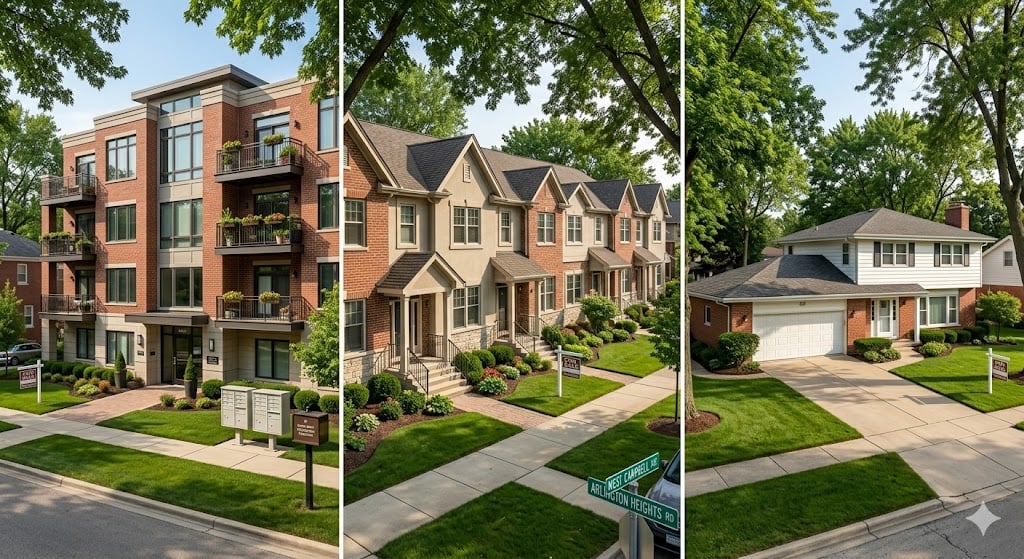
The difference between a condo, townhome, and single-family home comes down to three things: what you own, what you maintain, and what you pay each month.
With a condo, you usually own the inside of your unit and share responsibility for the rest of the property. With a single-family home, you own and maintain the structure and land. A townhome can fall somewhere in between, but its legal ownership structure matters more than how it looks.
Let’s walk through how the three compare so you can decide which one fits your budget, daily life, and future plans.
Key Takeaways
- Single-family homes often cost more upfront, while condos and townhomes may have lower purchase prices but include monthly association fees.
- In Illinois, a townhome may be legally organized as a condominium or as fee-simple ownership.
- Association fees may cover maintenance, insurance, landscaping, amenities, and reserves for future projects.
- Condo financing can include an additional review of the building and association.
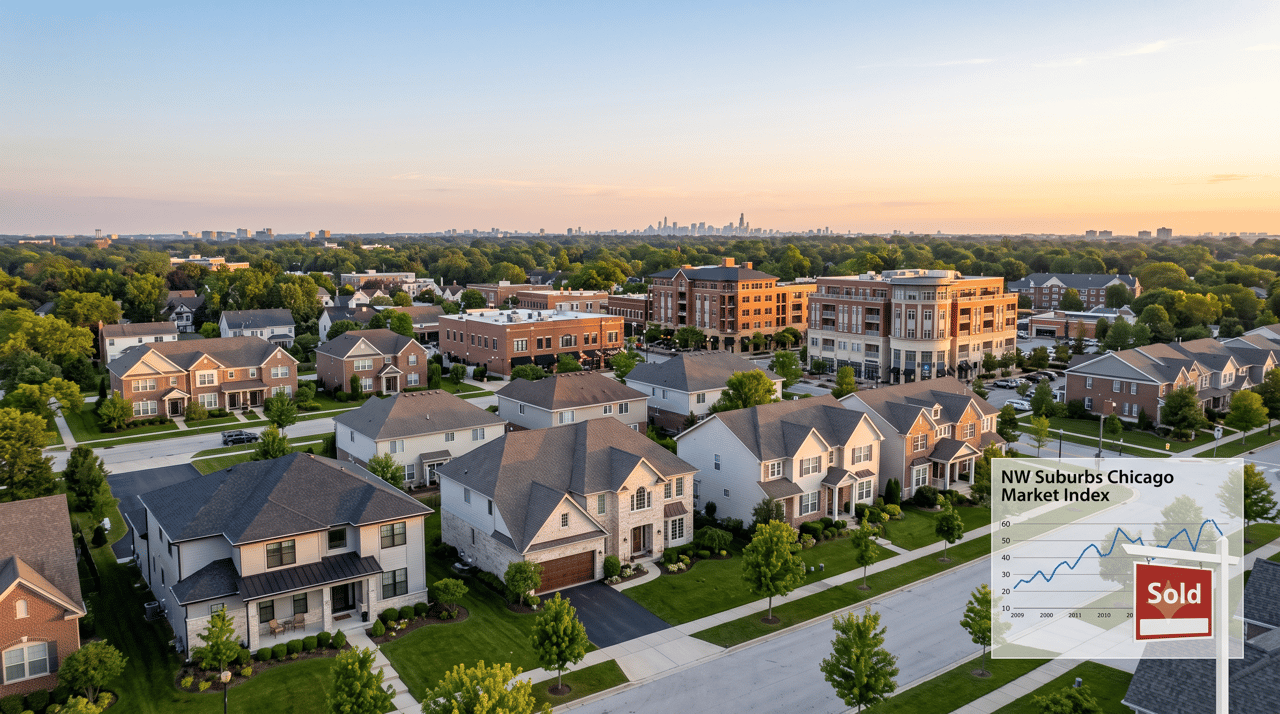
- Condos and townhomes are often found near downtown areas and Metra stations throughout the Northwest Suburbs.
What Do You Own With Each Property Type?
This is the first question to answer because ownership affects your maintenance, insurance, financing, and monthly costs.
Condominium: You generally own the interior of your unit and share an interest in the common areas. These may include the roof, exterior, hallways, grounds, parking areas, and amenities.
Illinois condominiums are governed by the Illinois Condominium Property Act, along with the association’s own declaration, bylaws, rules, and regulations.
Single-family home: You own the home and the land. You are usually responsible for the roof, exterior, plumbing, landscaping, driveway, and other maintenance unless the home is part of an association that covers certain services.
Townhome: “Townhome” describes the style of the property, not necessarily its legal ownership.
A townhome may be legally organized as a condominium. In that case, the owner may be responsible mainly for the interior while the association handles the exterior and common land.
Another townhome may be fee-simple, meaning the owner owns the structure and the land beneath it. The association may only maintain shared areas or provide services such as landscaping and snow removal.
Two townhomes that look nearly identical can have very different insurance requirements, association fees, and maintenance responsibilities.
My guide to condos and townhomes in Schaumburg explains how this difference can affect buyers in one of the area’s larger attached-home markets.
How Do the Monthly Costs Compare?
The purchase price is only one part of the decision. What matters most is the full monthly cost.
Condos may have a lower purchase price than nearby single-family homes, but they often have higher monthly association fees. Those fees may cover exterior maintenance, building insurance, landscaping, snow removal, utilities, amenities, and savings for future repairs.
Townhomes often fall somewhere in the middle. The purchase price and monthly dues vary widely based on the ownership structure and what the association covers.
Single-family homes may not have monthly association fees, but that does not mean maintenance is free. The owner must plan for repairs and replacements such as the roof, furnace, air conditioner, driveway, windows, and landscaping.
A common maintenance guideline is to save approximately 1% to 2% of the home’s value each year. This is only a starting point. The home’s age, condition, materials, and recent improvements will affect the actual amount.
Association dues are not automatically wasted money. They may cover expenses you would otherwise pay on your own. The larger question is whether the association manages its money well and whether the services match what you value.
Before buying a condo or townhome, review the association’s budget, reserves, insurance, meeting minutes, rules, and any current or planned special assessments. Your attorney should help you review the documents within the contract deadlines.
For a closer look at down payments, closing costs, and inspections, read my guide to how much money you may need to buy a home.
How Is Condo Financing Different?
When you finance a condo, the lender may review both your qualifications and the condominium project.
The lender may look at the association’s finances, insurance, reserves, owner-occupancy levels, delinquent assessments, pending litigation, and other details.
Some condominium buildings may not qualify for every loan program. FHA and VA financing can have additional project requirements.
Buyers considering FHA financing can search for project information through HUD’s condominium lookup. Your lender should still confirm whether a specific property meets the current loan guidelines.
If you plan to use FHA, VA, or another loan with project requirements, tell your agent and lender early. This can help you focus on properties that are more likely to work with your financing.
What Does Daily Life Look Like?
The numbers matter, but your daily routine may make the decision clearer.
Condo living usually requires less exterior maintenance. You may not need to handle snow removal, lawn care, gutters, or exterior repairs yourself.
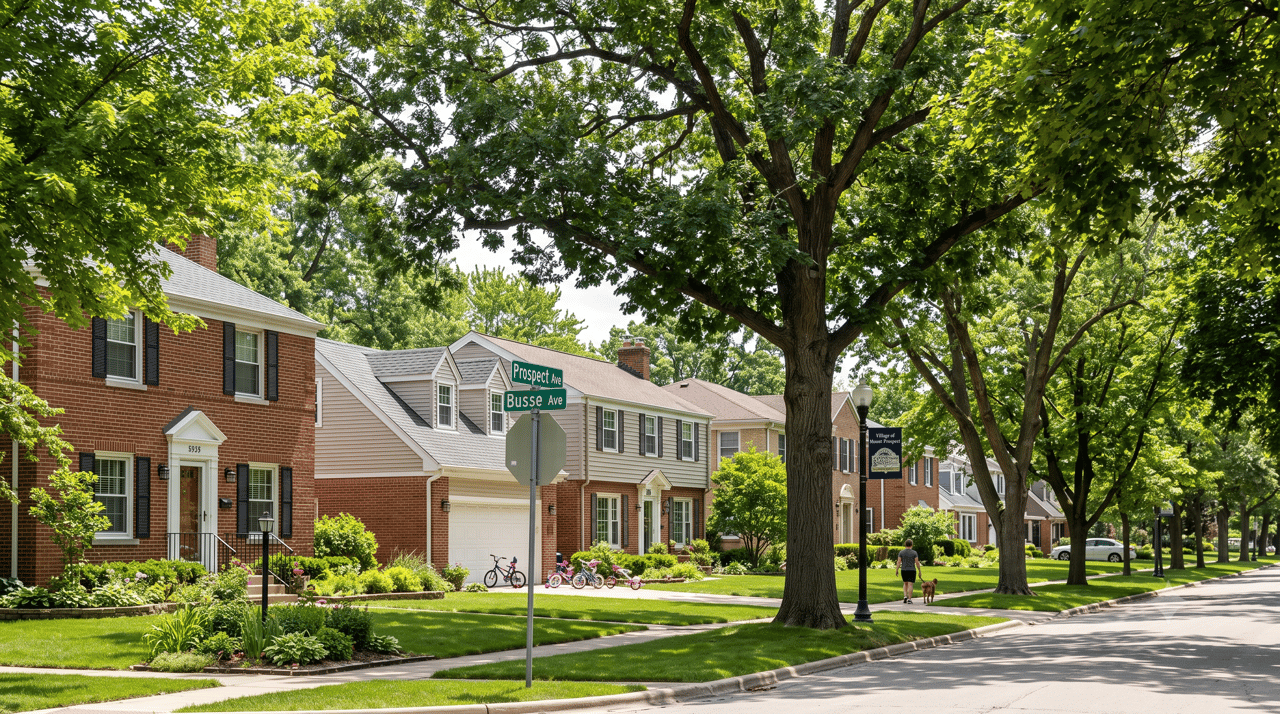
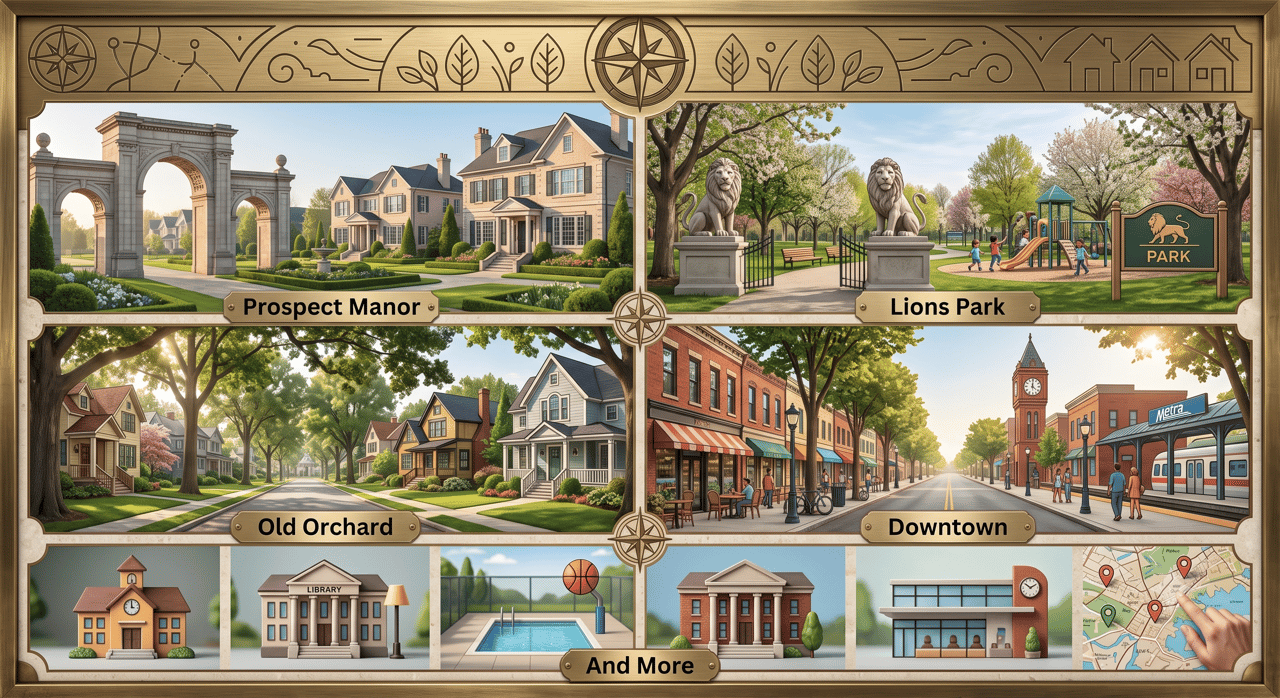
In the Northwest Suburbs, condos are often found near downtown areas and Metra stations in communities such as Arlington Heights, Des Plaines, Mount Prospect, and Palatine. This may make restaurants, shops, and public transportation more accessible at a lower price than a nearby single-family home.
The tradeoffs may include shared walls, association rules, pet restrictions, rental limits, and less control over building decisions.
Townhome living may offer more space, a private entrance, an attached garage, and a small patio or yard. Many associations handle at least some exterior work, although the exact responsibilities depend on the ownership documents.
Townhomes often have multiple levels, so stairs may be an important consideration.
Single-family living generally provides more privacy, control, yard space, and freedom to make changes. You may not share walls, and you can often decide when and how maintenance or improvements are completed.
The tradeoff is that the work and cost belong to you. In many Northwest Suburban homes built during the 1950s through the 1970s, buyers should plan for the upkeep that comes with older roofs, sewer lines, electrical systems, foundations, and mechanical equipment.
For some first-time buyers, a townhome may provide more space or access to a preferred community at a lower price than a single-family home.
For someone downsizing, an elevator condo or ranch-style townhome may reduce maintenance and make daily life easier. My guide to right-sizing your home explores that decision in more detail.
What About Resale Value?
Resale depends on more than the property type.
Location, condition, monthly costs, school attendance boundaries, nearby transportation, floor plan, parking, and market demand all affect value.
Single-family homes may appeal to a wider group of buyers because they include land, privacy, and more control. Condos and townhomes can also hold strong demand when they are well located, well maintained, and part of a financially healthy association.
Attached homes near downtown areas and Metra stations may appeal to first-time buyers, commuters, downsizers, and people who want less exterior maintenance.
For condos and townhomes, the association can have a major effect on resale. High dues, weak reserves, pending special assessments, limited financing options, or unresolved building problems may make a property harder to sell.
A well-managed association with reasonable fees and healthy reserves can make the home more appealing to future buyers.
How Do You Decide Which One Is Right?
These four questions can help you narrow the options.
1. How do you want to spend your free time?
If you enjoy yard work and home projects, a single-family home may feel rewarding. If you would rather have the association handle exterior maintenance, a condo or townhome may fit better.
2. What is your comfortable monthly cost?
Compare the mortgage payment, taxes, insurance, association fees, utilities, and maintenance savings. Do not compare mortgage payments alone.
3. How long do you expect to stay?
Your timeline may affect how much flexibility you need and how comfortable you are with the costs of buying and selling. A longer stay may give you more time to build equity and spread out transaction expenses.
4. What will your next chapter require?
Think about stairs, commuting, pets, storage, outdoor space, a home office, travel, accessibility, and possible changes in your household.
The right property should fit the life you are moving toward, not only the life you have today.
There is no single best option. The goal is to understand the responsibilities and choose the one that feels sustainable.
Once you have a direction, my guide to buying a home in Chicago’s Northwest Suburbs walks through the full process.
Frequently Asked Questions
What is the difference between a condo and a townhome?
A condominium is a legal form of ownership. You generally own your unit and share an interest in common areas. A townhome describes the design of the property and may be legally organized as either a condominium or fee-simple ownership.
Are association fees worth paying?
Association fees may cover maintenance, insurance, landscaping, snow removal, amenities, utilities, and reserves. Whether the fee is worthwhile depends on what is included, how well the association is managed, and whether those services fit your needs.
Is it harder to get a mortgage for a condo?
Condo financing may require an additional review of the association and building. The lender may examine finances, insurance, occupancy, delinquencies, litigation, and reserves. Some projects may not qualify for every loan program.
Do condos and townhomes appreciate as much as single-family homes?
Appreciation depends on the local market, location, condition, association health, monthly costs, and buyer demand. Single-family homes may benefit from land value, while well-located condos and townhomes can remain attractive to buyers seeking lower-maintenance living.
How much should I budget for single-family home maintenance?
A common starting guideline is 1% to 2% of the home’s value per year. Older homes or properties with aging systems may require more. A detailed inspection and review of recent improvements can help you create a more realistic budget.
Is a townhome a good first home?
A townhome can be a good first home for someone who wants more space and privacy than a condo without taking on all the maintenance of a single-family home. Review the ownership structure, monthly fees, association finances, rules, and maintenance responsibilities before deciding.
Which Property Type Fits Your Life?
This decision often becomes clearer when you picture your actual week. Think about your commute, your weekends, your monthly budget, and how long you expect to stay.
Touring each property type can also help. A condo, townhome, and single-family home may feel very different in person, even when the monthly costs are similar.
If you are comparing condos, townhomes, and single-family homes in Arlington Heights, Palatine, Mount Prospect, Buffalo Grove, Wheeling, or another Northwest Suburban community, you can schedule a time to talk, visit MyRealtorMari.com, or email me at [email protected].
For local real estate information and community tours, visit Life in the NW Burbs on YouTube.