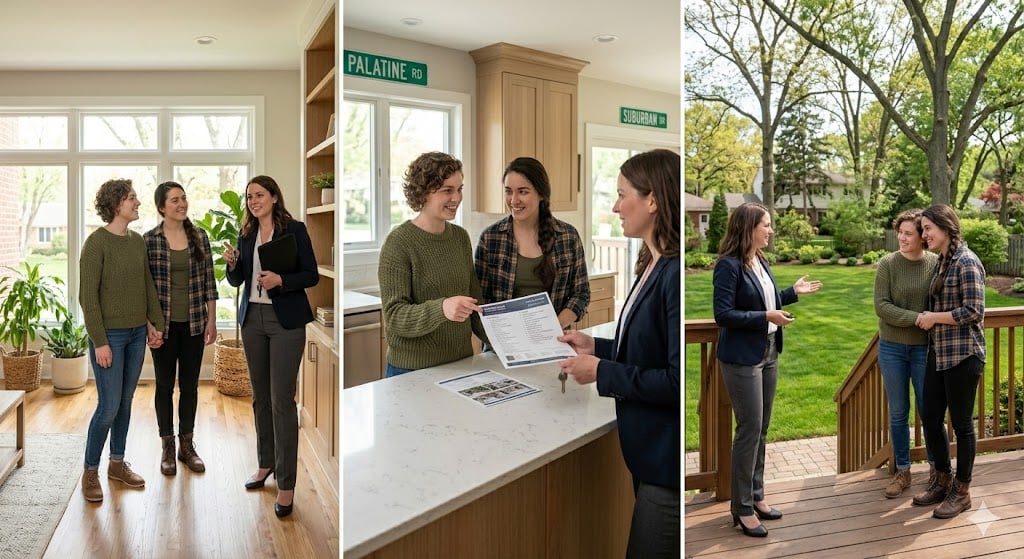
Before touring homes for the first time, buyers should get pre-approved, review and sign a written buyer brokerage agreement, and define their must-haves.
During each showing, focus on the location, layout, natural light, and major systems rather than the seller’s furniture or paint colors. It is also wise to assume that cameras or smart devices may be recording inside or outside the home.
Touring can be one of the most enjoyable parts of buying a home. A little preparation helps you stay focused and avoid rushed decisions.
Key Takeaways
- Get pre-approved before you begin seriously touring homes so you understand your budget and can act when the right property appears.
- Review and sign a written buyer brokerage agreement with your agent before touring homes together.
- Pay the most attention to the things that are difficult or expensive to change, including the location, lot, layout, and natural light.
- Assume cameras or smart devices may be present. Save conversations about your budget and negotiating strategy for after the showing.
- Verify the assigned schools directly with the school districts before making a decision based on a listing’s information.
Complete the First Steps Before Touring
I know looking at homes is more exciting than gathering documents. Still, two important steps should be completed before serious touring begins.
Get a mortgage pre-approval. A pre-approval gives you a clearer idea of the price range and monthly payment that may work for you. It also allows you to move quickly if you find a home you want to purchase.
In the Northwest Suburbs, a well-priced home may receive strong interest during its first weekend on the market. Waiting until after you find the home to contact a lender can make it difficult to submit an offer on time.
A pre-approval is different from a quick online estimate. The lender will usually review your income, assets, credit, and debts before issuing the letter.
My guide to how much money you may need to buy a home explains the down payment, closing costs, inspections, and savings you may want after closing.
Review your buyer brokerage agreement. Written buyer agreements are now a standard part of working with a real estate agent. The agreement explains the services the agent will provide, how the relationship works, and how compensation will be handled.
Take time to read it and ask questions before signing. A clear agreement helps everyone understand their responsibilities before you begin touring homes.
Know What You Are Looking For
Walking into showings without clear priorities can make every home feel either exciting or disappointing for a different reason.
Before your first tour, divide your wish list into three groups:
- Must-haves: The features or conditions that truly define your search.
- Nice-to-haves: Features you would enjoy but could live without or add later.
- Deal-breakers: Conditions you already know will not work for you.
Your must-haves might include the number of bedrooms, a first-floor bathroom, a home office, a certain commute, or space for pets. Deal-breakers might include a busy road, too many stairs, or a monthly payment above your comfort level.
Schools also require extra care in the Northwest Suburbs. School assignments follow the property’s exact address, not simply the town listed in the mailing address.
Two homes located close to each other may be assigned to different elementary, middle, or high schools. Listing websites may also contain outdated or incorrect information.
My guide to verifying school boundaries before buying explains how to check an address directly with the appropriate districts.
What Should You Look for During a Home Tour?
Pay the most attention to the parts of the property that cannot be changed easily.
You can change paint, flooring, light fixtures, and furniture. Changing the location, lot, layout, or amount of natural light is much harder.
During each tour, look at the following:
- Layout and daily flow. Picture carrying groceries from the car to the kitchen, doing laundry, working from home, and moving through an ordinary weekday.
- Natural light. Notice which rooms feel bright or dark and which direction the windows face.
- Major systems. Look at the roof from the ground, note the visible age of the furnace and water heater, and ask about the electrical system and windows.
- The basement or crawl space. Look for sump pumps, visible staining, musty odors, cracks, and other possible signs of moisture.
- Storage. Check closets, cabinets, garage depth, basement space, and room for seasonal items.
- The lot and surrounding street. Notice traffic, noise, drainage, parking, nearby buildings, and the general condition of the block.
You are not expected to inspect the home during a showing. Touring helps you decide whether the property fits your life. A licensed home inspector evaluates the condition after you are under contract.
My home inspection checklist for the Northwest Suburbs explains what an inspector may review later.
Remember That Cameras May Be Present
Doorbell cameras, security systems, and smart devices are common. It is safest to assume that conversations inside and near the home may be recorded.
That means a showing is not the best place to discuss your budget, offer strategy, or strongest reactions.
- Do not discuss your financial limit. Comments about your maximum budget could affect future negotiations.
- Keep strong reactions private. You do not need to announce that you love or dislike the home while standing inside it.
- Talk after leaving. The car is usually the best place for an honest conversation about price, concerns, and next steps.
Showing etiquette matters too. Arrive on time, remove your shoes or use the provided shoe covers, and leave the home as you found it.
You may open closets, cabinets that are part of the home, and doors to mechanical areas. Avoid opening dressers, furniture, or containers holding the seller’s personal belongings.
Ask before taking photos or videos, and keep children close in occupied homes.
How Many Homes Should You Tour?
There is no required number of homes to see before making an offer.
Some buyers find the right property during their first weekend. Others need several weeks or months to understand their choices and refine their priorities.
The first few tours are often educational. You may discover that a feature you thought was essential matters less than expected. You may also recognize a need you had not considered.
That is not indecision. It is part of learning what fits your life.
Try not to rush into an offer simply because the first home feels exciting. At the same time, touring dozens of homes may not create the certainty you are hoping to find.
Keep simple notes so the properties do not blur together. Before leaving each driveway, write down:
- What you liked most
- Your biggest concern
- Whether the home meets your must-haves
Photos can also help when the seller permits them. Be sure to label them with the property address.
What Happens After You Find the Right Home?
Once you decide to write an offer, the process can move quickly.
You and your agent will discuss the price, earnest money, closing date, financing, inspection terms, and other contract details. The seller may accept, reject, or counter the offer.
If your offer is accepted, several deadlines may begin right away. The inspection, attorney review, earnest money deposit, and formal loan application may all happen during the first several business days.
This is why preparing before the first tour matters. Buyers who already have their lender, attorney, inspector, and priorities in place can move through that first week with less stress.
My complete guide to buying a home in Chicago’s Northwest Suburbs walks through the process from budgeting to closing.
The Consumer Financial Protection Bureau also provides helpful mortgage and homebuying resources.
Frequently Asked Questions
What should you do before touring homes for the first time?
Get pre-approved, review and sign a written buyer brokerage agreement, and define your must-haves, nice-to-haves, and deal-breakers. This preparation helps you tour within a realistic budget and act when the right property appears.
What should you look for when touring a home?
Focus on the location, lot, layout, natural light, storage, and general condition of the major systems. Try to look past furniture, paint colors, and other cosmetic details that can be changed.
How many homes should you see before buying?
There is no correct number. Some buyers are ready to act after a few tours, while others need more time. The goal is to understand your priorities and recognize when a home meets the needs that matter most.
Can sellers hear you during a showing?
They may be able to. Many homes have doorbell cameras, security cameras, or smart devices. Avoid discussing your budget, offer plans, or negotiating strategy until you have left the property.
Do you need pre-approval before looking at homes?
You can attend an open house before being pre-approved, but serious buyers should complete pre-approval before scheduling private tours. This gives you a clearer budget and allows you to submit an offer without unnecessary delay.
What questions should you ask during a showing?
Ask about the age of the roof, furnace, air conditioner, and water heater. You may also want to ask what is included with the sale, whether permits were obtained for major work, and whether the seller has disclosed any known water, insurance, or structural concerns.
Your agent can help you request information that is not available in the listing.
Prepare for Your First Home Tours
Your first home search should feel exciting, but it does not need to feel rushed.
A clear budget, a thoughtful wish list, and a trusted team will help you compare homes more calmly and make a decision based on what truly fits.
If you are preparing to buy in Arlington Heights, Palatine, Mount Prospect, Buffalo Grove, Wheeling, or another Northwest Suburban community, you can schedule a time to talk, visit MyRealtorMari.com, or email me at [email protected].
For local community tours and buyer education, visit Life in the NW Burbs on YouTube.