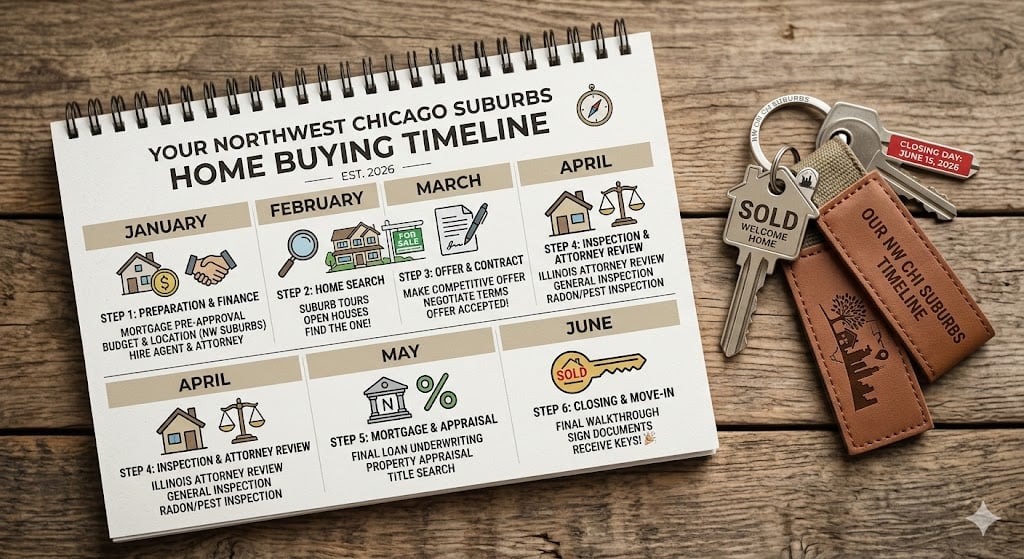
Buying a home in Illinois often takes about three to six months from serious preparation to getting the keys.
Pre-approval may take only a few days. The home search can take a few weeks or several months. Once your offer is accepted, a financed purchase often takes another 30 to 45 days to close.
The easiest way to plan is to work backward from your ideal move-in date. Let’s walk through each stage so you know what to expect.
Key Takeaways
- Plan for roughly three to six months from serious preparation to move-in, although some buyers move faster.
- Get pre-approved when you are close to actively touring and writing offers.
- The home search is the hardest part to predict. Some buyers find the right home quickly, while others search for several months.
- The first several business days after an offer is accepted are often the busiest part of the purchase.
- If you hope to move before a new school year, begin preparing during the winter or early spring.
Phase 1: Getting Ready
This is the quiet part of the process, but it matters.
Start by reviewing your credit, building your savings, and learning what homes cost in the communities you are considering. You will need to plan for the down payment, closing costs, inspections, moving expenses, and money left in reserve after closing.
Some buyers are ready to move forward right away. Others need six months or a year to save, improve their credit, or reduce debt.
My guide to how much money you may need to buy a home can help you set a realistic savings goal.
Qualified buyers may also have access to assistance through the Illinois Housing Development Authority. Programs and requirements can change, so speak with an approved lender before including assistance in your plan.
One helpful step during this stage is to avoid taking on new debt. A car payment, new credit card balance, or personal loan may affect how much you can borrow.
Phase 2: Pre-Approval and Building Your Team
This is when the process begins to feel more official.
You will meet with a lender, provide financial documents, and receive a pre-approval based on your income, assets, credit, and debts. The process may take a few days once the lender has everything they need.
You will also choose your real estate agent and complete the required written brokerage agreement before touring homes.
This is also a good time to identify a residential real estate attorney and home inspector. Once your offer is accepted, attorney review and inspection deadlines may begin quickly.
Pre-approval letters often need to be updated after a certain period, so it usually makes sense to get one when you are close to actively touring and writing offers. Your lender can tell you how long your letter will remain current.
Phase 3: Searching for a Home
This is the least predictable stage.
Some buyers find the right home during their first few weekends of touring. Others need several months to understand the market, compare communities, and decide which features matter most.
Your timeline will depend on your budget, preferred location, home style, school attendance boundaries, and how much inventory is available.
It is also normal for your priorities to change. You may begin with a long wish list and discover that location, condition, layout, or monthly cost matters more than you first thought.
Spring often brings more listings to the Northwest Suburbs, but it may also bring more competition. Fall and winter usually offer fewer choices, although buyers may face less competition.
Neither season is automatically better. The right timing depends on your needs and what is available.
My guide to buying a home in Chicago’s Northwest Suburbs explains budgeting, touring, school boundaries, offers, and the rest of the process.
Phase 4: Writing and Negotiating the Offer
Once you find the right home, the pace usually picks up.
You and your agent will discuss the offer price, earnest money, proposed closing date, financing, inspection terms, and other contract details.
The seller may accept the offer, reject it, or send back a counteroffer. Some negotiations are resolved within hours, while others take a few days.
In a competitive situation, the seller may set a deadline for buyers to submit their strongest offers.
The preparation you completed earlier matters here. A current pre-approval, a clear budget, and an understanding of the contract terms will help you make a thoughtful decision without feeling rushed.
Read my guide to what to know before writing a home offer in Illinois for a closer look at this stage.
Phase 5: Under Contract
This is the most structured part of the homebuying timeline.
The first week is usually the busiest. Attorney review and the inspection period may run at the same time. You may also need to deliver earnest money, complete your formal loan application, and respond to questions from your attorney and lender.
Your home inspection should be scheduled quickly. Afterward, you and your agent will review the findings and decide whether any concerns should be raised with the seller.
Your attorney handles the legal review and may help present inspection requests. My guide to attorney review for Illinois buyers explains how that process works.
The following weeks are usually quieter. The lender processes the loan, orders the appraisal, and sends the file through underwriting. The attorneys and title company review the legal and title documents. You will also arrange homeowners insurance.
During this time, respond quickly to requests and avoid major financial changes. Do not open new credit accounts, finance a vehicle, change jobs, or move large amounts of money without speaking with your lender.
A financed purchase often closes 30 to 45 days after the offer is accepted. A cash purchase may close sooner, depending on the contract and title work.
My guide to what happens after your offer is accepted walks through this stage in more detail.
Phase 6: Closing Week and Move-In
Before closing, your lender will provide a Closing Disclosure showing the final loan terms and amount due.
Review it carefully and compare it with the estimates you received earlier. The Consumer Financial Protection Bureau offers helpful information about reviewing mortgage and closing documents.
You will also complete a final walkthrough, usually shortly before closing. This is your opportunity to confirm that the home is in the expected condition, agreed-upon repairs were completed, and included items remain in the property.
At closing, you sign the final documents, funds are transferred, and ownership changes hands. Once the transaction is complete, you receive the keys.
After moving in, remember to change the locks and review whether you qualify for a homeowner exemption. Exemption eligibility, timing, and savings vary, so check the current requirements through the appropriate county office.
Working Backward From Your Move-In Date
Choose your ideal move-in month, then count backward.
- One to two months before your move: You will usually need an accepted offer to allow time for closing.
- Two to four months before your move: Plan to be actively touring and writing offers.
- Three to five months before your move: Complete your pre-approval and choose your real estate team.
- Four to six months or more before your move: Work on credit, savings, debt, and community research.
For example, someone hoping to be settled before a late-August school start may want an accepted offer by late June or early July. That often means touring in April and May and completing pre-approval during March.
A school-year move usually begins with planning in late winter, not during the summer.
Frequently Asked Questions
How long does it take to buy a home in Illinois?
Many buyers take about three to six months from serious preparation to move-in. This may include a few days for pre-approval, several weeks or months of searching, offer negotiations, and 30 to 45 days to close after an offer is accepted.
How long does closing take after an offer is accepted?
A financed Illinois purchase often closes within 30 to 45 days, although the exact date is written into the contract. Cash purchases may close sooner.
When should I get pre-approved?
Get pre-approved when you are close to actively touring and writing offers. Your lender can tell you how long the pre-approval remains current and when it should be updated.
What is the busiest part of buying a home?
The first several business days after your offer is accepted are often the busiest. Attorney review, the inspection, earnest money, and the formal loan application may all happen during this period.
When should I start if I want to move before the school year?
For a late-summer move, consider beginning the process during the winter or early spring. This gives you time to prepare, get pre-approved, tour during the spring market, and complete a 30- to 45-day closing.
Can you buy a home in less than three months?
Yes. A prepared buyer may move from the first tour to closing within six to eight weeks if the right property appears quickly and the transaction stays on schedule. Having your financing, attorney, inspector, and priorities ready can make a shorter timeline possible.
Build a Timeline Around Your Move
Every buyer’s calendar is different. You may be planning around a lease, a job change, a school year, or the sale of another home.
The process feels more manageable when your plan is built around your actual move-in goal, with extra time for the parts you cannot control.
If you are thinking about buying in Arlington Heights, Palatine, Mount Prospect, Buffalo Grove, Wheeling, or another Northwest Suburban community, you can schedule a time to talk, visit MyRealtorMari.com, or email me at [email protected].
For buyer education and local community tours, visit Life in the NW Burbs on YouTube.