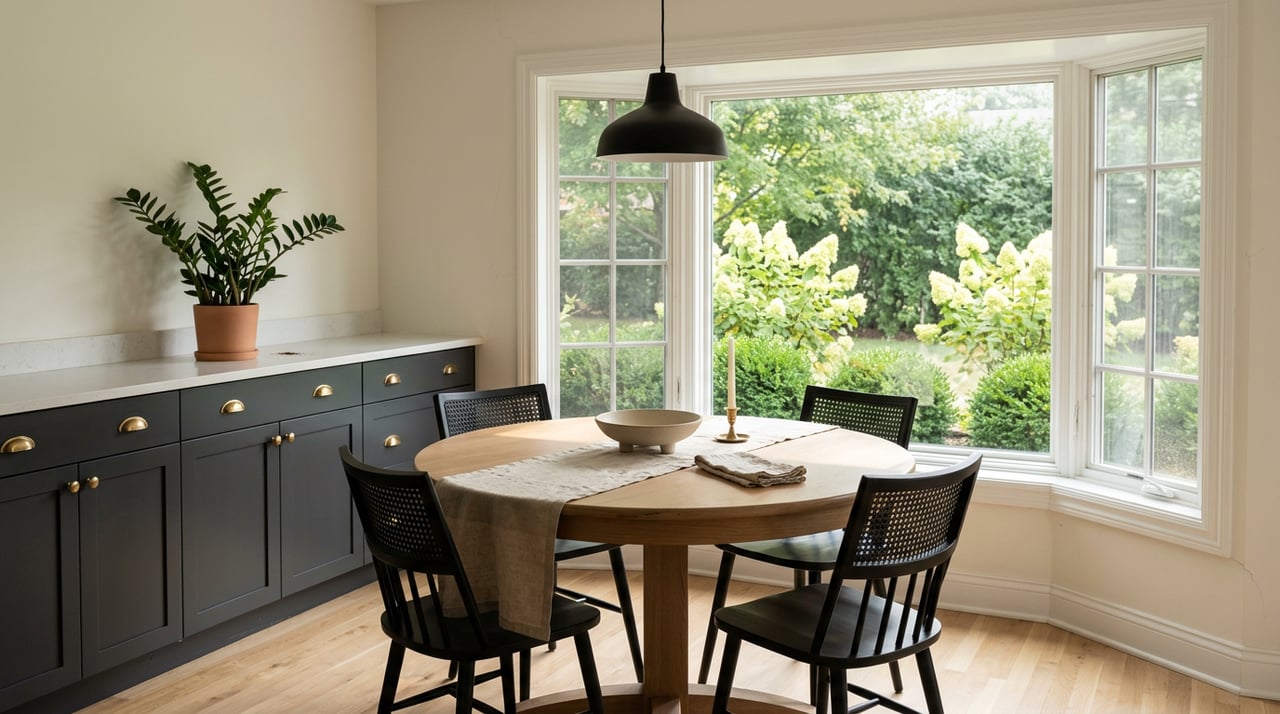
Selling a home in Palatine IL means competing in a market with a $400K median price point, a housing stock that skews toward 1960s–1990s builds, and buyers who are paying close attention to what they are actually getting for their money. The sellers who do best are not always the ones with the most updated homes — they are the ones who prepared thoughtfully, priced realistically, and listed at the right time.
Here is what to know before your home goes on the market.
Key Takeaways
- Palatine's median home price is approximately $400K — about $165K below Arlington Heights — so positioning and presentation matter more, not less.
- Palatine buyers in 2026 are prioritizing Metra access, updated kitchens and baths, and low-maintenance living.
- Many Palatine homes are 1960s–1990s builds that benefit from targeted, strategic updates rather than full renovations.
- Spring listings timed ahead of the District 211 school year calendar tend to perform well.
- Illinois law requires sellers to disclose known material defects. Cook County's older housing stock creates specific disclosure considerations sellers should understand before listing.
- Pricing a Palatine home requires understanding its specific neighborhood, school boundaries, and condition — not just the town-wide median.
What Palatine Buyers Are Looking For in 2026
Palatine attracts a wide range of buyers — first-timers stretching their budget, families relocating from Chicago for school access, downsizers leaving larger homes nearby, and commuters who want Metra access without paying Arlington Heights prices.
Across all of those groups, a few things come up consistently in 2026.
Metra proximity. The Palatine station at 137 W. Wood Street on the Union Pacific Northwest Line is a genuine selling point. Buyers who need to commute to the city will factor walkability to the station into their offer. If your home is within reasonable walking distance, that belongs in your marketing.
Updated kitchens and bathrooms. Palatine's housing stock is older. Buyers know it. They are not expecting perfection, but they are making mental notes about what they will need to spend after closing. A kitchen that feels dated but functional reads differently than one that feels genuinely worn out. If your kitchen or primary bath has been updated in the last ten to fifteen years, highlight it. If it has not, that affects your pricing conversation.
Low-maintenance living. This shows up in both the buyer pool and the questions agents field. Buyers are asking about roof age, HVAC age, windows, and mechanicals. The less deferred maintenance they perceive, the more comfortable they feel with the price. Sellers who can document recent improvements — new roof, new furnace, updated electrical panel — are at a real advantage.
Move-in readiness. With interest rates where they are, buyers are already stretching. Many are not in a position to take on a major project on top of a mortgage. Homes that feel ready to live in — even without being fully renovated — are moving faster than homes that require immediate work.
Palatine Pricing: What the $400K Median Actually Means
Palatine's median sale price of approximately $400,000 is meaningfully below Arlington Heights, which sits closer to $565,000. That gap matters for how you think about your home's position in the market.
It does not mean Palatine homes are harder to sell. It means buyers shopping in Palatine are making value comparisons — between Palatine and nearby towns, between your home and others in the same price range, and between what they could buy in Palatine versus what that same money gets them elsewhere.
A few things to understand about pricing in this market.
Neighborhood matters within Palatine. Homes in areas with strong school assignments, walkable downtown access, or proximity to the Metra station often support prices above the town-wide median. Homes farther out — with less walkability or on busy roads — may price below it. The median is a reference point, not a target.
Condition adjustments are significant. Because buyers in this price range are often stretching financially, visible deferred maintenance or dated systems create larger price pressure than they might in a higher-priced market. A $20,000 kitchen refresh on a $400K home may return close to full value. The same $20,000 on a $565K home might matter less because buyers have more financial cushion.
Overpricing is costly here. Buyers in the $350K–$450K range are active online, have seen a lot of inventory, and are often working with buyers agents who pull comps carefully. A home that sits because it is priced above market loses time, momentum, and eventually nets less than a well-priced listing would have in the first place.
My guide to how to price your home to sell in the NW Chicago suburbs covers the pricing process in more detail.
Staging for Palatine's Housing Stock
Most Palatine homes were built between the 1960s and the 1990s. That means ranch homes, tri-levels, split-levels, cape cods, and two-stories — all with floor plans and finishes that reflect their era.
The goal of staging in this market is not to make a 1978 ranch look like a new build. It is to help buyers see the home clearly and feel good about it.
Start with cleanliness and light. These have more impact than almost any cosmetic update. Deep-cleaned homes with bright lighting and clean windows read as cared-for, which is exactly what buyers in this market are looking for.
Declutter aggressively. Older homes often have smaller closets and tighter floor plans. Removing furniture, personal items, and excess belongings makes rooms feel larger and allows buyers to picture their own life in the space.
Address the entry. First impressions in person start at the front door. Fresh paint on the front door, clean landscaping, and a tidy walkway signal care before a buyer steps inside.
Focus cosmetic updates on the kitchen and baths. You do not need a full renovation. Updated hardware, new faucets, fresh caulk, and a deep clean can meaningfully change how a dated kitchen or bathroom reads to buyers. For homes where the bones are good but the finishes are worn, targeted updates often return more than their cost.
Neutralize. Bold paint colors, heavy window treatments, and highly personal décor can make it harder for buyers to visualize the space as their own. Neutral walls, simple window coverings, and clean surfaces help.
Handle odors. This comes up in buyer feedback more than sellers expect. Pet odors, musty basements, and smoke are among the fastest ways to lose a buyer's interest.
For a deeper look at which updates pay off before listing, see my guide to best home updates before selling in the NW Chicago suburbs.
And if you are weighing repairs versus selling as-is, my post on whether to make repairs before selling or sell as-is walks through how to think about that decision.
Timing Your Listing: The District 211 School Calendar Factor
Spring is consistently one of the strongest listing windows in Palatine — and the District 211 school calendar is part of why.
Families who want to be settled before the next school year are motivated to be under contract by May or June. That means the active search window for family buyers typically runs from late February through April. Listings that go live during that window have access to the highest concentration of motivated, move-in-ready buyers.
Township High School District 211 serves Palatine with two high schools — Palatine High School and William Fremd High School. Many families purchasing in Palatine are buying specifically for those school assignments. When your listing goes live matters to how many of those buyers see it at the right moment in their search.
That said, spring is also when the most competition hits the market. A well-prepared, well-priced home in March tends to outperform an unprepared home listed in late April — even if the late-April market is technically busier.
Talk to your Realtor about the specific timing that makes sense for your home and your timeline.
What Sellers Need to Disclose in Cook County
Illinois law requires sellers to complete a Residential Real Property Disclosure Report. This form asks sellers to disclose known material defects and conditions that could affect the property's value or the buyer's decision to purchase.
Palatine's older housing stock creates specific areas sellers should think through carefully before listing.
Flooding and water. Basement water intrusion, sump pump issues, overhead sewer systems, and past flooding events are all disclosable. Illinois has additional disclosure requirements specifically related to flooding. If your home has experienced water issues — even if they were addressed — that history belongs on the disclosure form.
Roof and structural. Known roof leaks, prior repairs, or structural concerns must be disclosed. Buyers will almost certainly have an inspection, and an inspector will find evidence of past issues even if they appear resolved.
HVAC, electrical, and plumbing. Known defects in mechanical systems must be disclosed. If you know your electrical panel is outdated or your furnace is at the end of its serviceable life, that is part of your disclosure.
Permits and unpermitted work. If work was done on the home without permits — a finished basement, an addition, a deck — that is something buyers and their attorneys will ask about. The Village of Palatine has permit history on file, and buyers' attorneys often pull it. Disclosing and addressing permit gaps before listing is generally better than having it surface mid-transaction.
Lead paint. For homes built before 1978, federal law requires sellers to provide buyers with a Lead-Based Paint Disclosure and the EPA's lead paint pamphlet.
The disclosure form is a legal document. Work with your attorney and your Realtor to complete it accurately. The risks of incomplete or inaccurate disclosures are significant.
If you want to see how these considerations play out in a parallel market, my guide to preparing your home for sale in Arlington Heights covers similar ground for Cook County sellers next door.
What to Do Before Calling a Realtor
The most prepared sellers do a few things before their first listing appointment.
Pull your tax records. Log into the Cook County Assessor to confirm which exemptions are currently applied to your property — most commonly the Homeowner Exemption and, if applicable, the Senior Freeze. These affect the tax bill a buyer will see. Exemptions applied to your account do not automatically transfer to a buyer; reviewing the current record helps your Realtor explain the tax picture accurately.
Gather documentation on improvements. Permits pulled, contractor invoices, appliance age, roof receipts, HVAC service records — all of this helps your listing tell a better story and supports your price.
Look at comparable recent sales. You do not need to do a full market analysis yourself, but going into the conversation with a general sense of what similar homes have sold for recently helps you engage more productively with the pricing discussion.
Think through your timeline. Do you need to be out by a certain date? Are you buying somewhere else? Do you need flexibility on the closing date? Your timeline affects how you price, negotiate, and structure the transaction.
Ready to Talk Through Your Next Steps?
If you are thinking about selling in Palatine, I can help you understand what your home is worth in the current market, what preparation makes the most sense for your specific property, and how to time your listing for the best result.
Visit MyRealtorMari.com, watch local seller guidance and neighborhood content on Life in the NW Burbs, email [email protected], or schedule a time to talk.
Frequently Asked Questions
What do sellers need to disclose when selling a home in Illinois?
Illinois sellers must complete a Residential Real Property Disclosure Report covering known material defects including water and flooding history, roof and structural issues, HVAC and mechanical defects, unpermitted work, and — for pre-1978 homes — lead paint. Cook County's older housing stock makes thorough disclosures especially important.
When is the best time to list a home in Palatine IL?
Late February through April tends to be the strongest listing window. Family buyers motivated by the District 211 school calendar are actively searching during this period, looking to be under contract before the school year ends. Well-prepared homes listed early in this window typically see the most competition among buyers.
What is the median home price in Palatine IL?
Palatine's median home sale price is approximately $400,000 as of 2026 — about $165,000 below neighboring Arlington Heights. Prices vary by neighborhood, school assignment, condition, and proximity to the Metra station. A market analysis for your specific home is more useful than the town-wide median alone.
Should I renovate my home before selling in Palatine?
Most Palatine sellers benefit more from targeted, cost-effective updates than full renovations. Clean, decluttered, well-lit, and move-in ready outperforms expensive upgrades in this price range. Focus on the kitchen and bathrooms if cosmetic updates are on the table, and address deferred maintenance that buyers and inspectors will flag.
Does Metra access affect home values in Palatine?
Yes. Proximity and walkability to the Palatine Metra station on the Union Pacific Northwest Line is a real differentiator for buyers who commute to Chicago. Homes within walking distance of the station at 137 W. Wood Street often command a premium over comparable homes farther out.
What permits do I need to disclose when selling a Palatine home?
Sellers should disclose work done without required permits. The Village of Palatine maintains permit records, and buyers' attorneys frequently pull them during attorney review. Unpermitted improvements — finished basements, additions, decks, fences — can create complications mid-transaction. Identifying and addressing permit gaps before listing is generally the better path.
About the Author
Mari Van Meter is a REALTOR® with the Dragonfly Home Team at Berkshire Hathaway HomeServices American Heritage Real Estate, serving Palatine, Arlington Heights, Mount Prospect, Buffalo Grove, Wheeling, and the surrounding Northwest Suburbs of Chicago. She holds the C2EX, SRES, PSA, and ABR designations. Learn more about Mari.