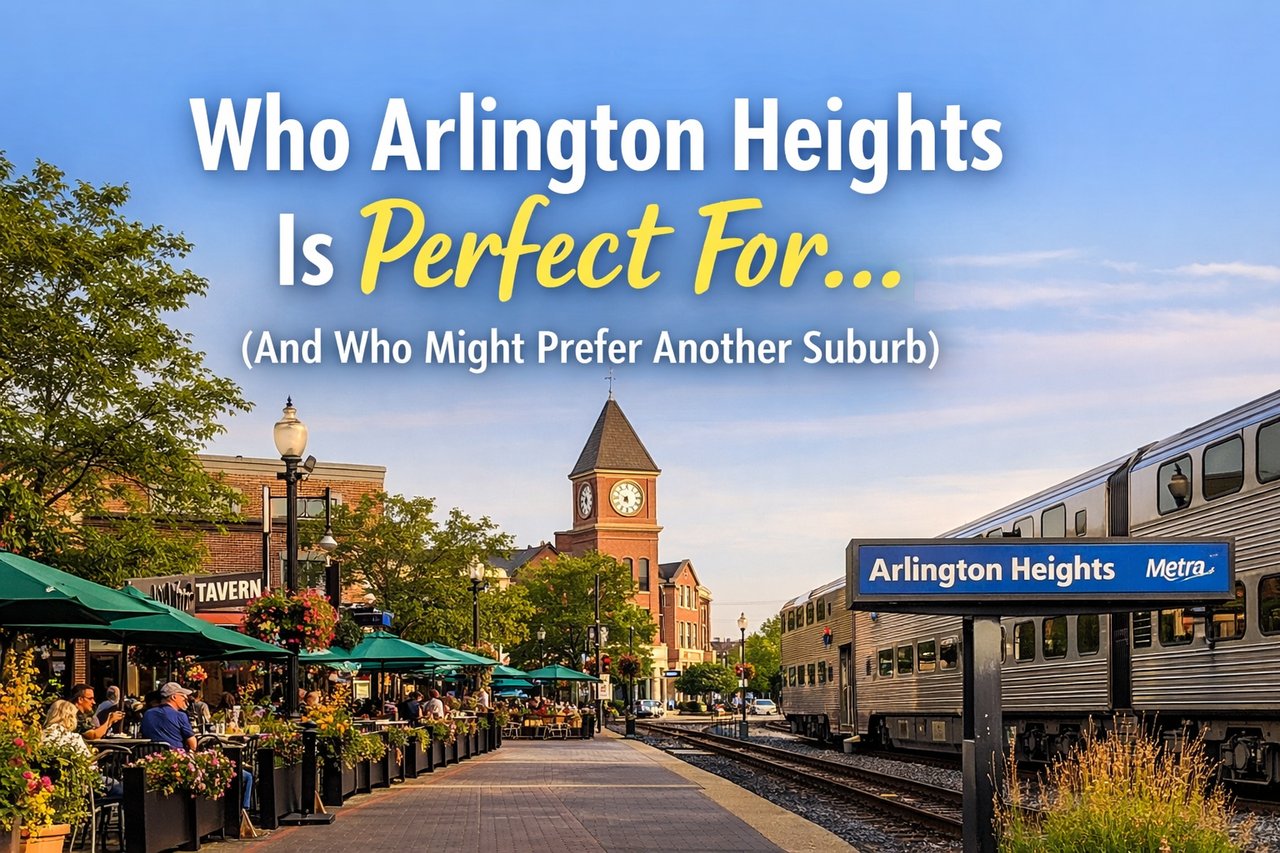
Arlington Heights can be a strong choice if you value a walkable downtown, Metra access, extensive parks and recreation, established housing, and an active community calendar. It may be less compelling if another Northwest Suburb gives you more of what matters to you for the same budget. The better question is how Arlington Heights fits your everyday priorities.
Key Takeaways
- Downtown Arlington Heights combines restaurants, entertainment, local businesses, Metra service, and seasonal events in a relatively compact area.
- The Arlington Heights Metra station serves the Union Pacific Northwest Line to Chicago’s Ogilvie Transportation Center.
- The Arlington Heights Park District manages approximately 715 acres of parkland along with pools, golf, fitness facilities, community centers, and recreation programs.
- Housing varies considerably by neighborhood, property type, age, condition, lot, and proximity to downtown.
- Arlington Heights is only one of several Northwest Suburbs worth comparing. Palatine, Mount Prospect, Buffalo Grove, Wheeling, and Rolling Meadows offer different combinations of housing, transportation, recreation, and location.
- The most useful comparison is not which suburb is “best,” but which specific home and location support the way you want your everyday life to work.
Is Arlington Heights a Good Place to Live?
Arlington Heights offers an unusual combination for the Northwest Suburbs: a true downtown district, direct Metra service, extensive park and recreation facilities, established residential areas, restaurants, entertainment, and community events.
That combination puts Arlington Heights on a lot of home-search lists.
But I would not choose a town based on popularity or a “best suburbs” ranking.
I would look at how you actually expect to live.
Will you use the train? Do you want to walk to dinner? How much outdoor space matters to you? What kind of home are you hoping to find? How does the full monthly housing cost compare with nearby communities?
Those questions tell you much more than a ranking ever will.
Is Downtown Arlington Heights Walkable?
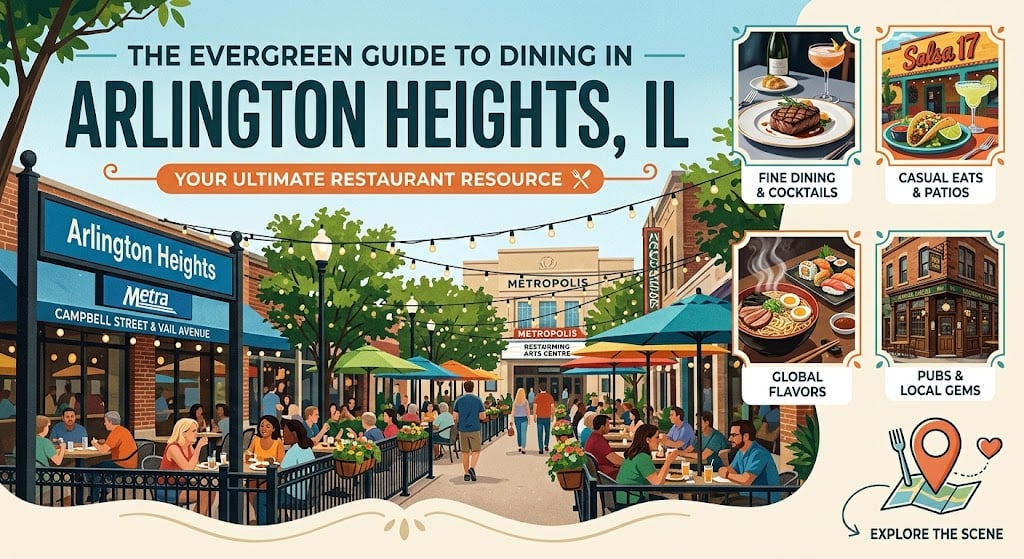
Yes. Downtown Arlington Heights is one of the more walkable town-center environments in Chicago’s Northwest Suburbs, with restaurants, entertainment, businesses, community spaces, and the Metra station concentrated around Vail Avenue, Campbell Street, and the surrounding blocks.
During warmer months, Arlington Alfresco changes the downtown experience even more.
For 2026, Arlington Alfresco runs from May 1 through September 28, with roughly 20 participating restaurants using expanded outdoor dining areas.
The Arlington Heights Farmers Market also runs Saturdays from May 9 through October 17, 2026 at 110 W. Fremont Street.
If downtown access matters to you, though, do not simply search for listings labeled “near downtown.”
Walk from the actual property.
The difference between being a few blocks away and being a longer walk away can change how often you realistically use downtown.
For a closer look at this part of town, read my guide to living near downtown Arlington Heights.
Can You Commute From Arlington Heights to Chicago by Metra?
Yes. The Arlington Heights station serves Metra’s Union Pacific Northwest Line, which connects with Ogilvie Transportation Center in downtown Chicago.
The station is located in the center of downtown Arlington Heights, making train access one of the village’s most noticeable transportation features.
Travel time varies by train and stopping pattern, so I recommend checking the current Metra schedule rather than relying on one advertised commute time.
If commuting matters to your move, consider the entire routine:
- How far is the property from the station?
- Would you walk, drive, bike, or get dropped off?
- Will you need commuter parking?
- How often will you actually travel downtown?
- Where do you need to go after arriving at Ogilvie?
My complete guide to commuting from Arlington Heights to Chicago goes into the trip in more detail.
What Are Parks and Recreation Like in Arlington Heights?
Arlington Heights has an extensive park and recreation system. Arlington Heights Park District planning materials identify approximately 715 acres of parkland across the district.
Facilities and programs include parks, pools, golf, fitness facilities, community centers, athletic fields, playgrounds, and year-round recreation.
Arlington Heights Park District is the best source for current facilities, programs, registration, and schedules.
What Is Lake Arlington?
Lake Arlington is a Park District recreation area centered around a 50-acre detention lake.
The Park District currently lists the path around Lake Arlington at approximately 1.96 miles. The site also includes fishing, boating, a playground, fitness areas, picnic space, and other recreation amenities.
For someone who regularly walks, runs, bikes, uses recreation programs, or spends time outdoors, proximity to these facilities may be worth including in the home-search comparison.
What Is There to Do in Arlington Heights?
Arlington Heights has year-round restaurants, performances, recreation, and community programming, with much of the most visible activity centered downtown.
Metropolis Performing Arts Centre brings theater, concerts, comedy, and other performances to Campbell Street.
Warm-weather events include Arlington Alfresco and the Arlington Heights Farmers Market. Other community programming changes throughout the year.
This is an area where I encourage people to experience the community rather than simply read about it.
Spend an evening downtown. Visit the farmers market. Walk Lake Arlington. See what you would actually use.
That gives you a much clearer picture of everyday life here.
What Types of Homes Are Available in Arlington Heights?
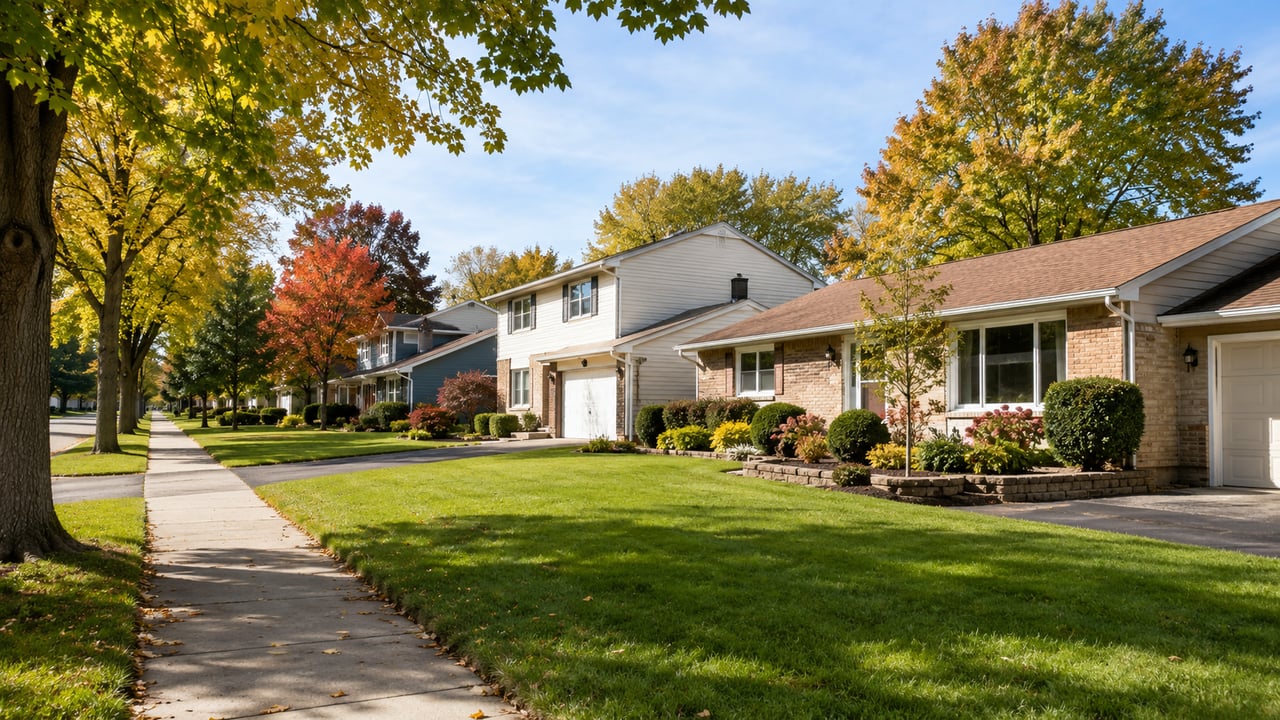
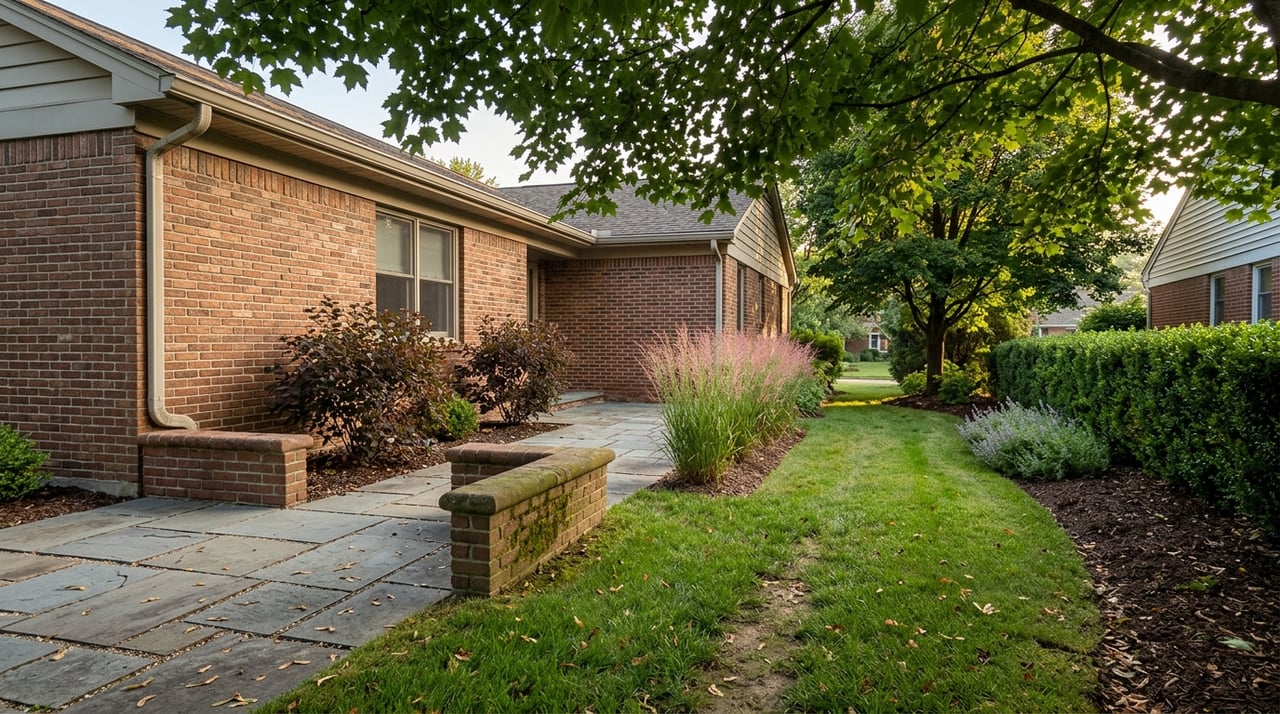
Arlington Heights has detached homes, condos, townhomes, and other attached housing across a wide range of ages, sizes, conditions, and price points.
That variety is one reason village-wide averages can only tell you so much.
A condo close to downtown, a mid-century detached house, a larger renovated property, and an attached home may all have Arlington Heights addresses while offering completely different ownership experiences.
When comparing homes, I would pay attention to:
- Property type
- Condition and renovations
- Lot and outdoor space
- Parking and garage space
- HOA or condo assessments
- Property taxes
- Distance to Metra or downtown, if important to you
- Recent comparable sales
For a closer look at different parts of town, read my Arlington Heights neighborhood guide.
Is Arlington Heights Expensive?
Housing costs in Arlington Heights vary significantly by property type, size, condition, location, taxes, and association costs. The most useful comparison is the total monthly and long-term cost of a specific property rather than a single town-wide number.
When comparing Arlington Heights with nearby communities, I would look at more than the list price.
Include:
- Purchase price
- Property taxes
- Homeowners insurance
- HOA or condo fees, if applicable
- Condition and likely maintenance
- Transportation costs
A less expensive house is not always the less expensive house to own.
And a higher-priced property is not automatically the wrong choice if its location or condition reduces costs elsewhere.
My Arlington Heights cost-of-living guide breaks those pieces down in more detail.
What Are the Trade-Offs of Living in Arlington Heights?
Arlington Heights offers strong access to downtown amenities, Metra, recreation, and community programming, but those features do not have the same value to every household.
Here are the trade-offs I would think through.
How Much Would You Use Downtown?
If restaurants, performances, community events, and walkability are things you expect to use regularly, proximity to downtown may have real day-to-day value.
If you rarely expect to use those amenities, they may matter less in your housing decision.
How Important Is Metra Access?
Direct Metra service can be very useful when Chicago is part of your regular routine.
If you rarely travel downtown, another feature may matter more to you than proximity to the station.
How Much Space Do You Need?
Lot sizes and spacing between homes vary by neighborhood and property.
Rather than assuming Arlington Heights does or does not provide enough land, compare actual properties with nearby suburbs based on the amount and type of outdoor space you want.
What Does the Full Housing Cost Look Like?
Purchase price is only one part of affordability.
Property taxes, assessments, insurance, condition, maintenance, and commuting costs all affect what a home costs to own.
For a deeper look at the positives and trade-offs, read my pros and cons of living in Arlington Heights.
How Does Arlington Heights Compare With Nearby Northwest Suburbs?
Arlington Heights is one of several Northwest Suburbs worth comparing. Palatine, Mount Prospect, Buffalo Grove, Wheeling, and Rolling Meadows each offer different combinations of housing, transportation, recreation, shopping, and community amenities.
I would avoid trying to rank them from best to worst.
Instead, compare what each community actually offers for the specific homes you are considering.
How Does Arlington Heights Compare With Palatine?
Both Arlington Heights and Palatine have stations on Metra’s Union Pacific Northwest Line and established downtown areas.
The housing mix, property taxes, exact commute, downtown proximity, and available inventory differ by property. If those two communities are on your list, comparing actual homes usually tells you more than comparing town-wide averages.
How Does Arlington Heights Compare With Mount Prospect?
Both communities have Metra service on the Union Pacific Northwest Line, established residential areas, parks, and central business districts.
The right comparison depends on the individual property, location, taxes, commute, housing type, and amenities you expect to use.
How Does Arlington Heights Compare With Buffalo Grove?
Buffalo Grove has extensive residential areas, parks, recreation, shopping, and access to major transportation routes. Its physical layout is different from Arlington Heights’ traditional downtown-centered pattern.
If a walkable downtown and direct downtown Metra station are priorities, that distinction is worth considering. If they are not, compare the homes and amenities that matter more to you.
How Does Arlington Heights Compare With Wheeling or Rolling Meadows?
Wheeling and Rolling Meadows are nearby communities with their own combinations of housing, recreation, shopping, transportation, and property taxes.
They are worth including in a search when the goal is to understand what different locations and property types offer within your budget.
My town-by-town guide to Chicago’s Northwest Suburbs provides a broader starting point.
What Should You Consider Before Moving to Arlington Heights?
Before deciding on Arlington Heights, compare your everyday priorities with what a specific property and location actually provide.
I would ask yourself:
- How often would I use downtown Arlington Heights?
- How important is Metra access?
- Which parks or recreation facilities would I realistically use?
- What property type works best for me?
- How much outdoor space do I want?
- What is my comfortable total monthly housing cost?
- How does this specific home compare with similar options in nearby suburbs?
Those questions can narrow a search much faster than scrolling through hundreds of listings without a clear framework.
What Is the Bottom Line on Living in Arlington Heights?
Arlington Heights offers a strong combination of downtown amenities, Metra access, parks, recreation, housing variety, restaurants, and community programming. Whether those features make it the right choice depends on how much you personally value and use them.
I live in Arlington Heights, and one thing I appreciate about helping people look here is that different parts of the village can offer very different day-to-day experiences.
You do not need to decide that Arlington Heights is the “best suburb.”
You need to understand whether a particular home and location make sense for the way you want your ordinary days to work.
That is the comparison I would make.
Trying to Decide Whether Arlington Heights Belongs on Your List?
If you are comparing Arlington Heights with other Northwest Suburbs, I can help you look at the practical differences between specific homes and locations, including housing type, taxes, condition, Metra access, walkability, parks, and overall cost.
Schedule a conversation with me or explore more Northwest Suburban resources at MyRealtorMari.com.
Frequently Asked Questions About Living in Arlington Heights
Is Arlington Heights walkable?
Downtown Arlington Heights is relatively walkable, with restaurants, entertainment, businesses, and the Metra station concentrated within a compact area. Walkability varies substantially outside the downtown core, so evaluate the actual route from a property to the places you expect to use.
Does Arlington Heights have a Metra station?
Yes. The Arlington Heights station serves Metra’s Union Pacific Northwest Line and connects with Ogilvie Transportation Center in Chicago. Train times and stopping patterns vary, so check the current Metra schedule when evaluating a commute.
How much parkland does Arlington Heights have?
Arlington Heights Park District planning materials identify approximately 715 acres of parkland. The district operates parks, pools, golf courses, community centers, fitness facilities, athletic areas, Lake Arlington, and year-round recreation programs.
What is Lake Arlington?
Lake Arlington is a Park District recreation area built around a 50-acre detention lake. The Park District currently lists the walking path at approximately 1.96 miles. The site also includes fishing, boating, playground and fitness amenities.
Is Arlington Heights more expensive than nearby suburbs?
There is no single useful answer because housing costs vary by property type, condition, location, taxes, and available inventory. Compare specific Arlington Heights properties with similar homes in nearby communities and include taxes, insurance, assessments, maintenance, and transportation in the total cost.
Which suburbs should I compare with Arlington Heights?
Nearby communities commonly worth comparing include Palatine, Mount Prospect, Buffalo Grove, Wheeling, and Rolling Meadows. Each offers a different mix of housing, transportation, recreation, and amenities, so the most useful comparison depends on your priorities and the specific properties available.